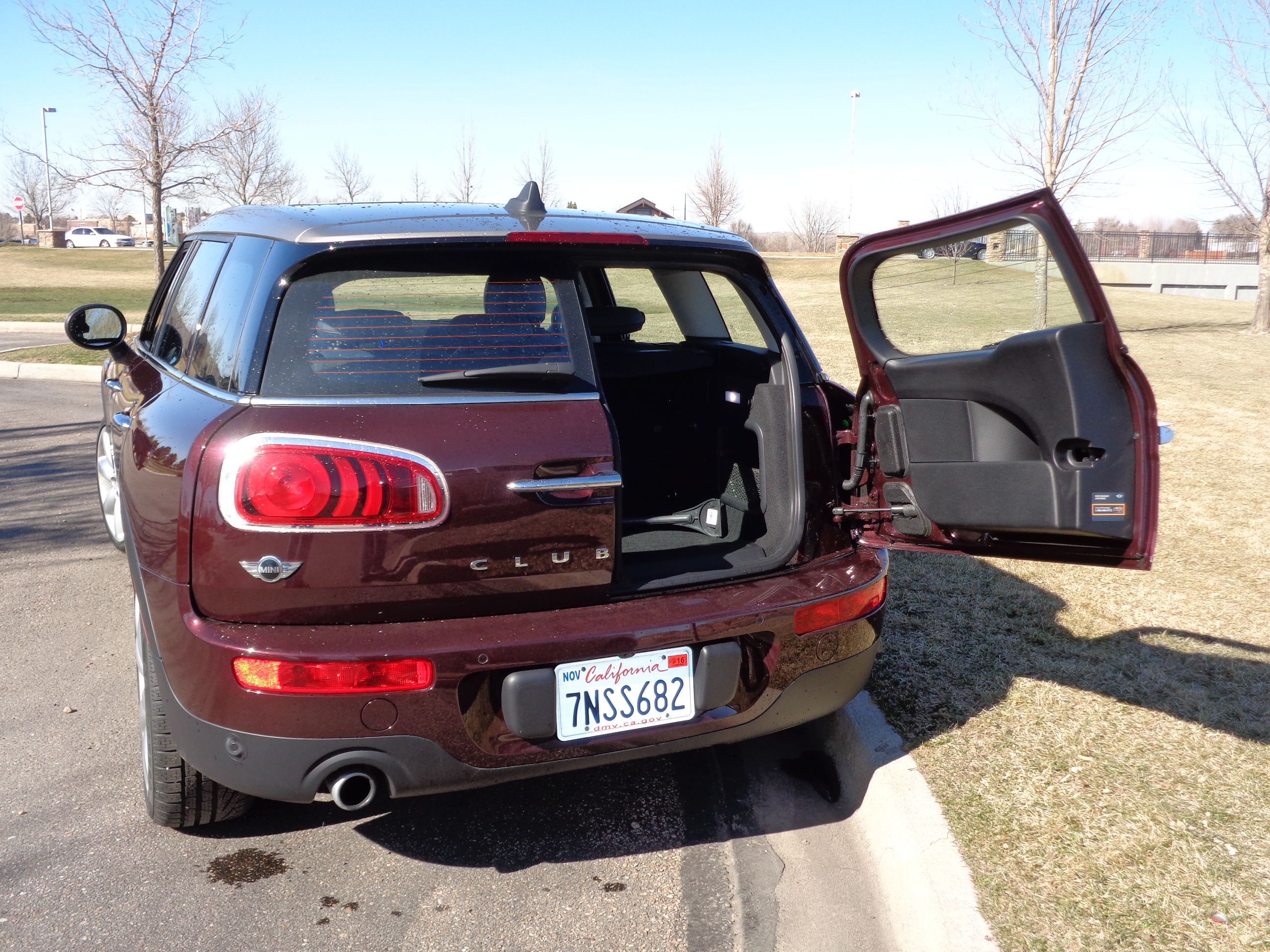
The 2016 Mini Cooper Clubman feature split doors at the rear. (Bud Wells photo)
It’s the biggest Mini Cooper I’ve ever seen. Still small, though.
The 2016 Mini Cooper Clubman has been stretched 10 inches over the previous generation and measures 168.3 inches, same as a Fiat 500X. It has four doors at the sides and old-fashioned split doors at the rear.
Before climbing in to the Clubman, walk around to those rear doors, often referred to as barn doors, and, with the key in your pocket, stop for a couple of seconds, then swing your foot beneath the rear bumper. The half-door on the right side flies open.
That little trick is appreciated if you’re standing there with an armload of groceries or firewood or a stack of newspapers.
Walk to the left around the car, open the driver’s door just long enough to pull the hood release. Another surprise is in store beneath the hood – a 3-cylinder engine. Don’t be dismayed; it’s a 1.5-liter, twin-power turbocharged 3 and performs quite respectably. It is the same small engine used in the BMW 218i. BMW, you know, owns the Mini, which is still built in England.
Very noticeable on crawling into the driver’s seat are the nice chesterfield leather seats finished in indigo blue. They’re sport-styled short seats, comfortable enough for normal-length drives, and they’re heated for cool mornings.
Mated to the engine is a 6-speed Steptronic automatic transmission. A switch at the base of the shifter offers three driving modes: Mid for normal, Green for economy and Sport for increased performance. Within a second or two of pulling the lever toward the driver for Sport, a slight surge is felt, steering pressure is tightened and shifts are delayed. The turboed 3-cylinder is rated at 134 horsepower and 162 lb.-ft. of torque. The Mini’s track has been widened by a couple inches and dynamic damper control lends added cornering capability from a stiffer suspension.
With travel on some interesting country roads and lots of stop-and-go in town, the Clubman’s 3-cylinder averaged 28.6 miles per gallon of regular unleaded fuel. It carries an EPA estimate of 25/34.
The Clubman’s sticker price of $35,450 reflects the ingenuity of BMW’s ownership. It includes the diamond-pattern stitching of the chesterfield seats, panoramic moonroof, harman/kardon premium sound system, rearview camera, rear park-distance control, enhanced navigation/USB /Bluetooth.
Among standard items are cruise control, dual-zone climate control and rain-sensing wipers.
The Clubman returned to the Mini lineup in 2007. In its present form, it is the biggest car Mini has ever produced.
For those seeking more performance than that provided by the 3-cylinder, a Clubman S model is equipped with a 189-hp, 2.0-liter turbocharged 4-cylinder engine.
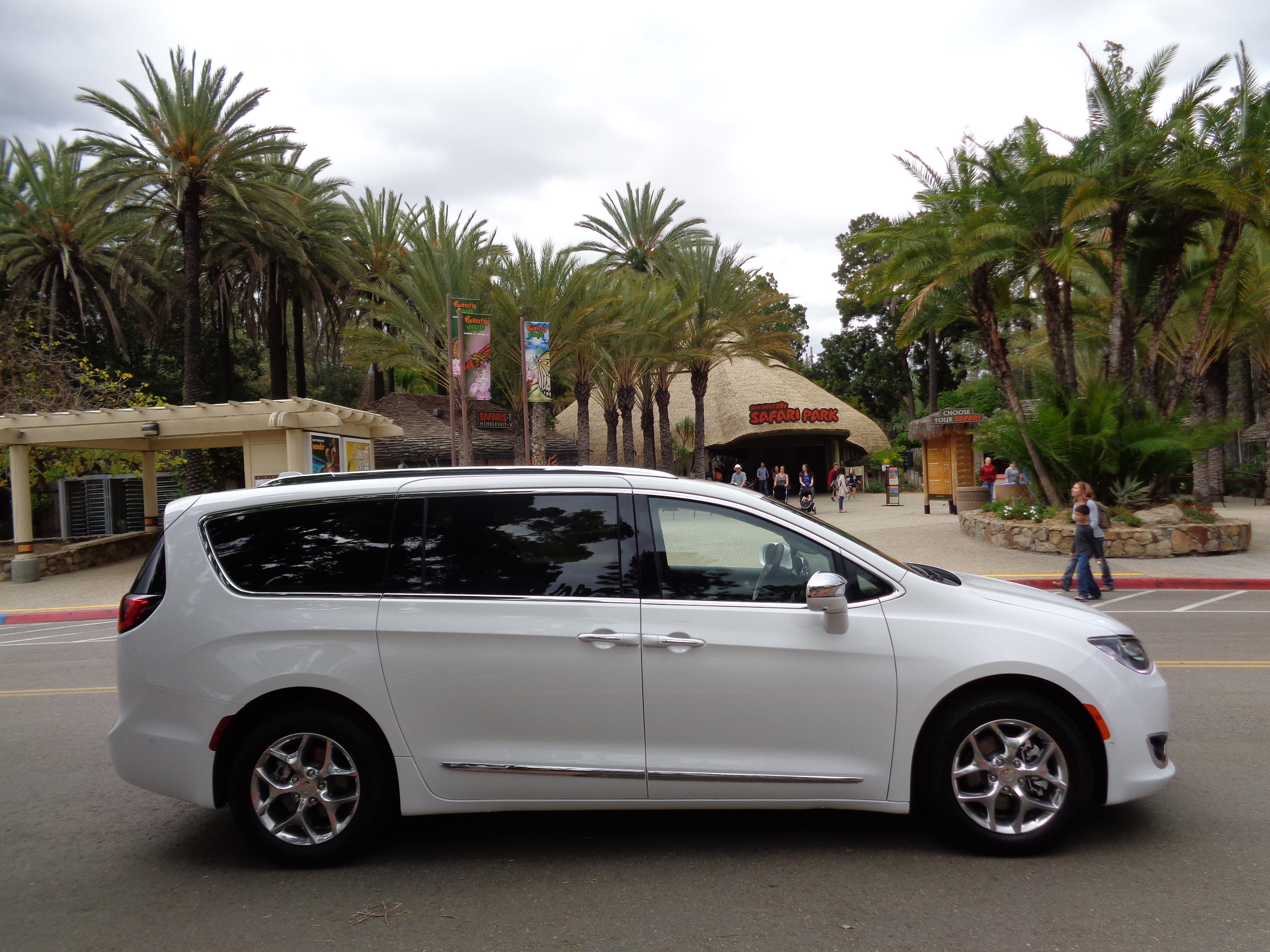
The 2017 Chrysler Pacifica minivan at San Diego Zoo’s Safari Park. (Bud Wells photos)
After 14 million sales in 30 years, why change the name of your minivan?
In order to ask that of Chrysler, Jan and I drove 1,300 miles, in a Fiat, to the luxurious Pelican Hill Resort at Newport Beach, Calif., recently.
There was more to it than that; I was invited there to attend the unveiling of the 2017 Chrysler Pacifica minivan, successor to the Town & Country.
Matt McAlear, senior manager of Chrysler Brand Product Marketing for Fiat Chrysler Automobiles, and Rick Deneau, head of Chrysler and Alfa Romeo Brands, and other Chrysler executives were on hand to oversee the first drives of the all-new Pacifica.
The minivan market isn’t going away, Deneau said, even though crossovers continue to grow in popularity. “We are seeking a fresh approach with a new name with the Pacifica to maintain our market share domination,” he said. “This one offers unparalleled levels of functionality, technology and styling.” Chrysler expects minivan sales to remain at about 500,000 yearly (minivan sales peaked at 1.37 million in 2000). Longtime rivals to the Town & Country and Dodge Grand Caravan have been the Honda Odyssey and Toyota Sienna. Chrysler and Dodge combined have led the market since launching it with 1984 models.
While the 2016 Grand Caravan will continue to be built through this year, it eventually will go away and
Pacifica will fill Chrysler’s minivan needs.
Designers have softened the front end of the Pacifica over the Town & Country, as well as extend the overall length and width by an inch and the height by 2 inches. Its track has been widened to 68.3 inches, compared with 65.6 on the Town & Country.
An improvement is the new rotary dial shifter on the console, replacing the shifter on the dash. The dial controls the 9-speed automatic transmission tied to the 3.6-liter Pentastar V-6 engine producing 287 horsepower and 262 lb.-ft. of torque for the front-wheel-drive van. It will be the most horsepower among all minivans and is rated at 28 miles per gallon on the highway.
The push of a button by kids will automatically trigger the sliding side doors of the Pacifica, and the van offers a vacuum in a rear corner which, with its hose, can reach all areas of the interior.
And there will be a plug-in hybrid version with an all-electric range of 30 miles; the hybrid will use two electric motors with the 3.6-liter V-6 engine.
Jan and I drove the new Pacifica to San Diego for a tour of the city zoo’s Safari Park.
We drove through heavy rain on our return to Newport Beach; the Pacifica, with its wider track and longer wheelbase was well-planted and predictable in its handling on the rain-filled Pacific Coast Highway.
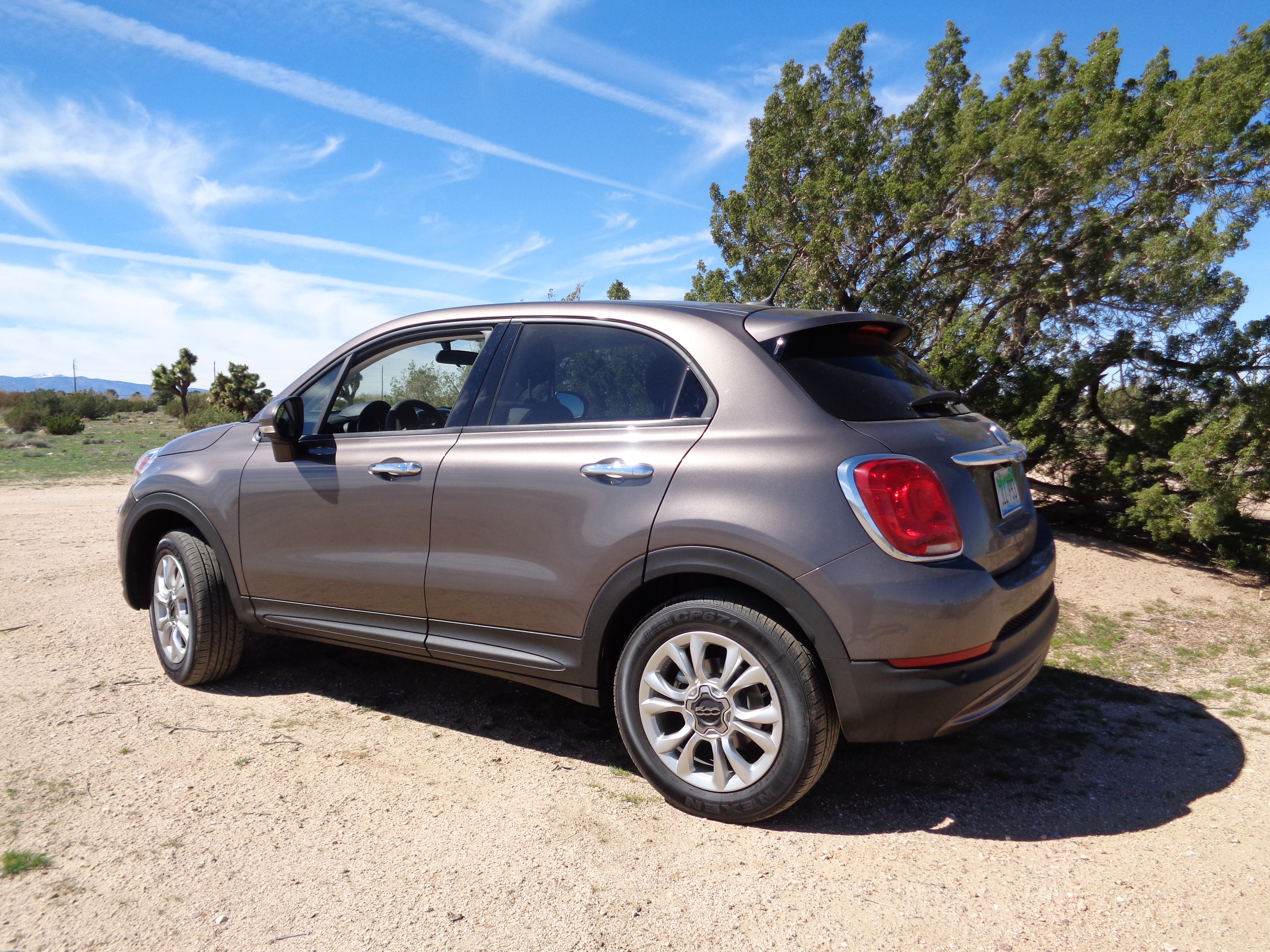
The 2016 Fiat 500X at San Bernardino, Calif.
After complaining about delivery to me of two front-wheel-drive Fiat 500X models several months ago, I received the AWD version for the long drive to California.
After 21 hours of driving time, having covered 1,319 miles to Newport Beach, my summary is: Jan and I agreed the newly bolstered seats were supportive and comfortable, wider than those on other smaller vehicles; biggest complaint was the 500X’s failure to maintain steady highway speeds on the many, many hills through the Southwest with its 2.4-liter 4-cylinder engine and 9-speed automatic transmission; average of 27 miles per gallon for the trip was decent. Boosting the performance capability was the opportunity to move from Eco drive mode to Sport, which raised the revs and delayed shifts in the 9-speed.
The Fiat’s sticker price of $27,005 included an option package of rear park assist, rearview camera, blind-spot and cross-path detection, heated front seats and steering wheel, dual-zone air control and windshield-wiper de-icer.
The subcompact 500X crossover SUV is a sister car to the Jeep Renegade. They both come off a Fiat Chrysler Automobiles assembly line in Melfi, Italy.
We flew back from Newport Beach; had a couple days rest before the opening of the Denver Auto Show.
The Pacifica was among featured new products at the 2016 Denver Auto Show, which ended a five-day run on Sunday at the Colorado Convention Center.
While covering the car show on Wednesday, I met with Rod Buscher, longtime auto dealer and executive, who was there to promote a new venture “to change and improve the used car marketplace for consumers.”
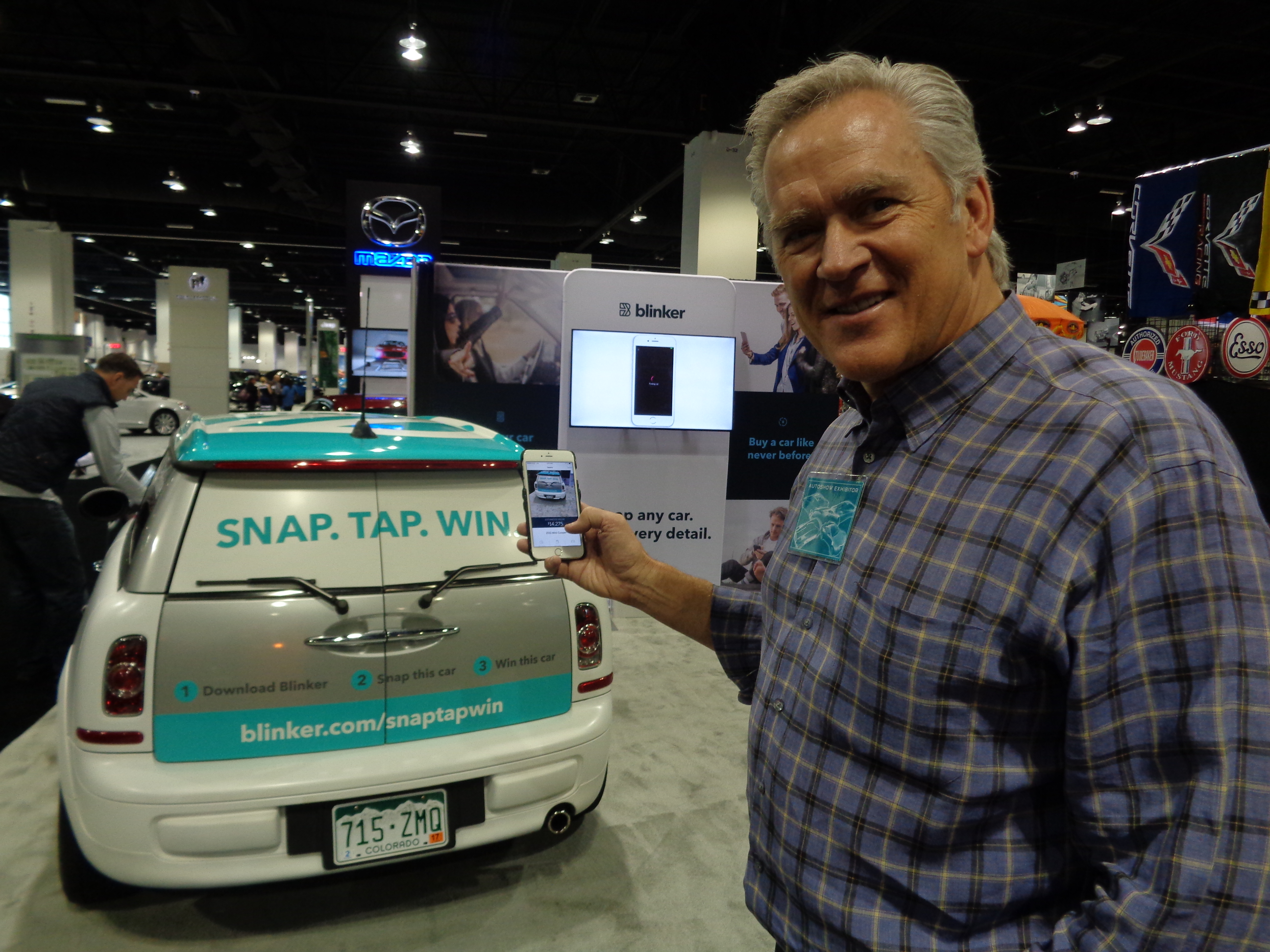
Rod Buscher displays use of Blinker app at Denver Auto Show.
My first contact with Buscher was more than 20 years ago when he was partner in dealerships with John Elway in Denver. He and Elway teamed up in 1987 to purchase a Jeep business and 10 years later they sold their growing group of auto stores to AutoNation. Buscher in 2007 partnered with the George Gillett family to establish a national group of dealerships, Summit Automotive Partners.
The newest venture is Blinker, founded by Buscher (president) and Tony Wilbert (CEO) of San Francisco. “It’s an automotive technology company that provides all the tools and products necessary to make buying or selling a car or truck privately easier, safer and faster,” said Buscher
The explanation makes not a lot of sense until Buscher holds up and aims a mobile app at the rear of a used Mini Cooper Clubman, pushes a button and the app delivers the year, make and model of that car, its mileage and its estimated value. Blinker partners with Black Book to display vehicle valuations.
Blinker has been launched in Colorado this spring with intent to give users the power to buy, sell and research used cars. Buscher and Wilbert plan to launch Blinker in other major markets around the country.
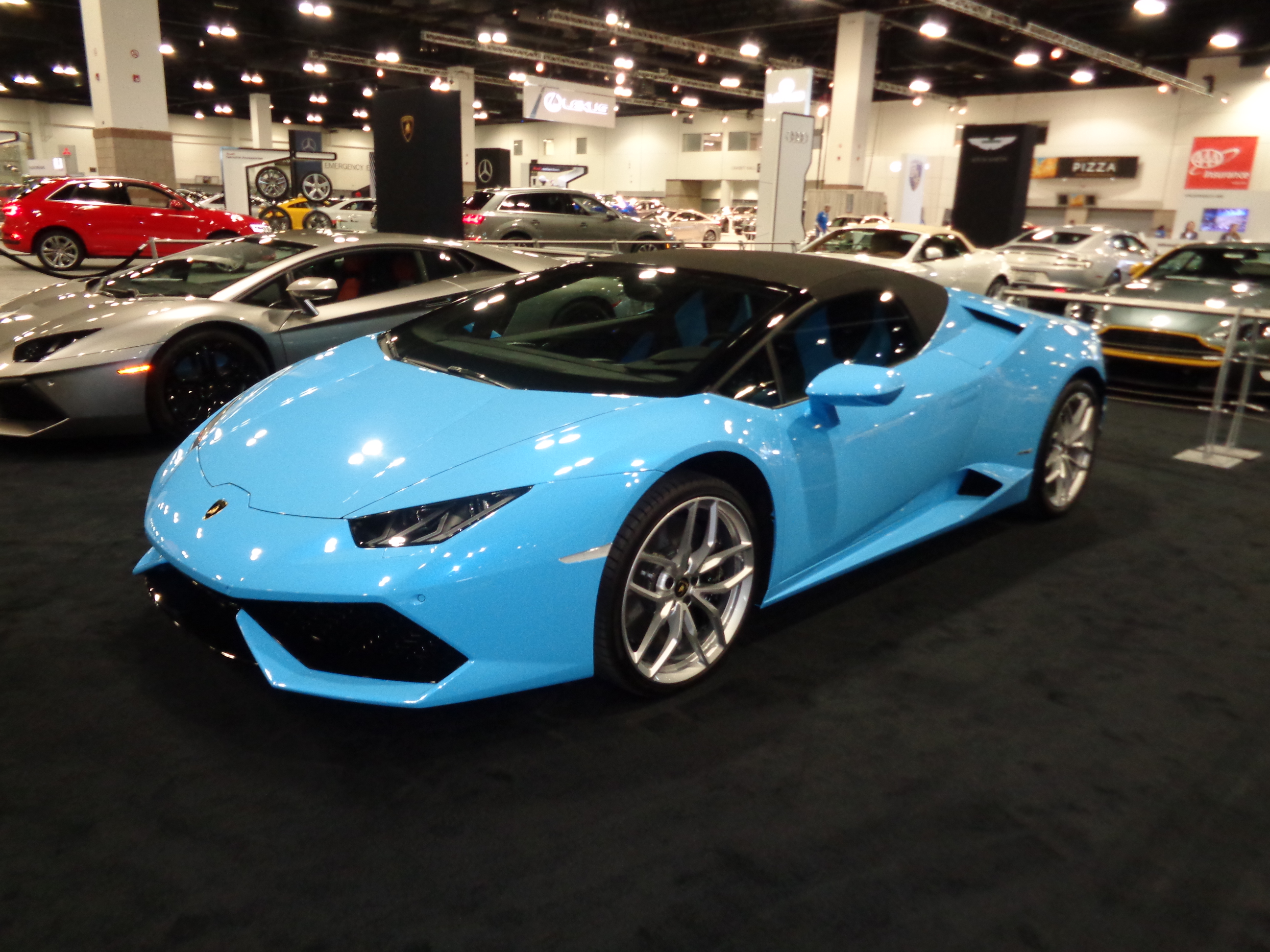
The 2016 Lamborghini Huracan Spyder, with V-10 power and finished in sky blue exterior, starts at $275,000 in price. (Bud Wells)
The glamour of more than 500 new cars and trucks attracted large crowds to the Colorado Convention Center March 16-20 for the annual Denver Auto Show.
Earning special recognition in voting by members of the Rocky Mountain Automotive Press the night before the official opening of the show were:
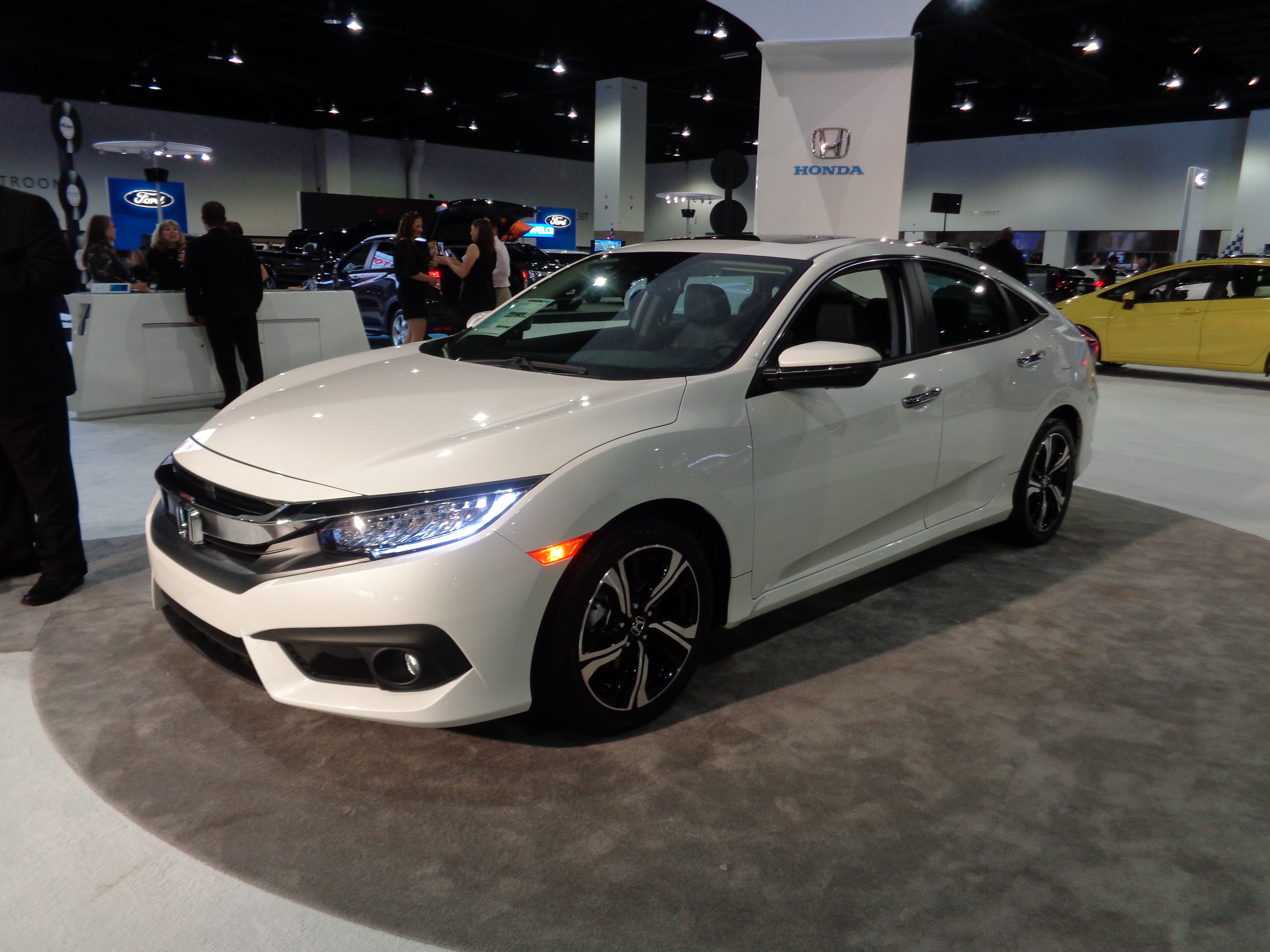
• The 2016 Honda Civic as Car of the Year.
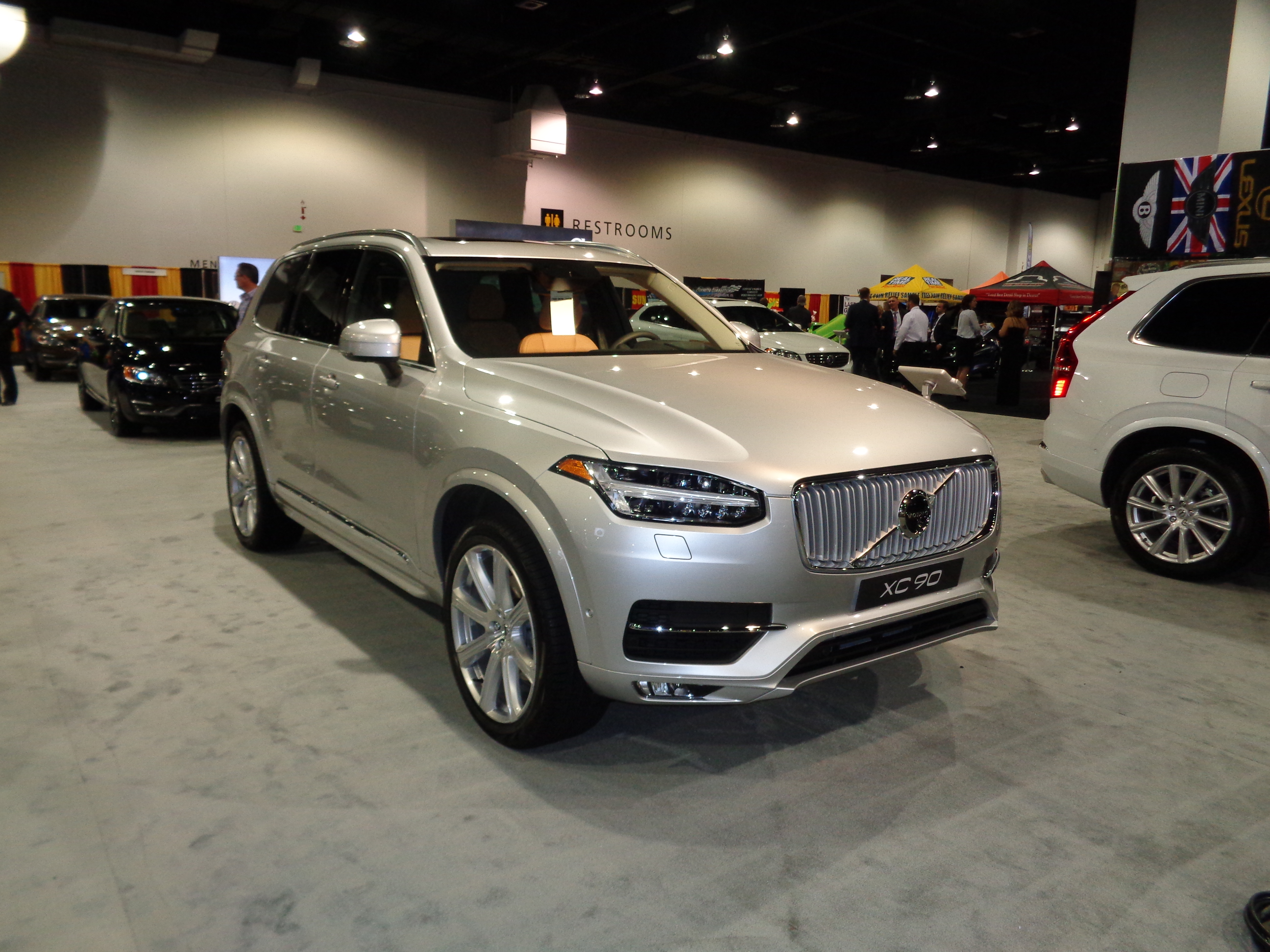
• The 2016 Volvo XC90 as Suv/Crossover of the Year.
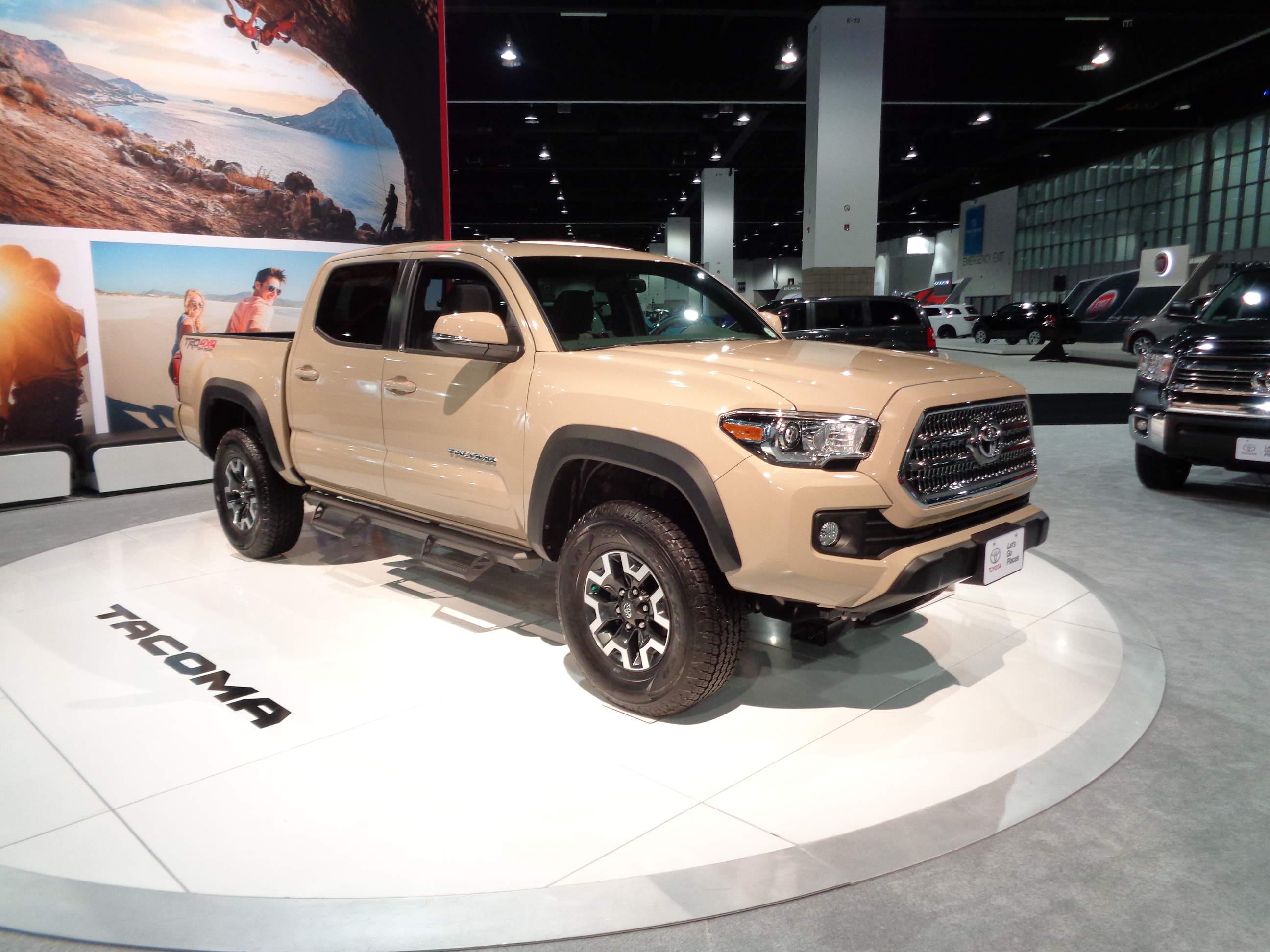
• The 2016 Toyota Tacoma as Truck of the Year.
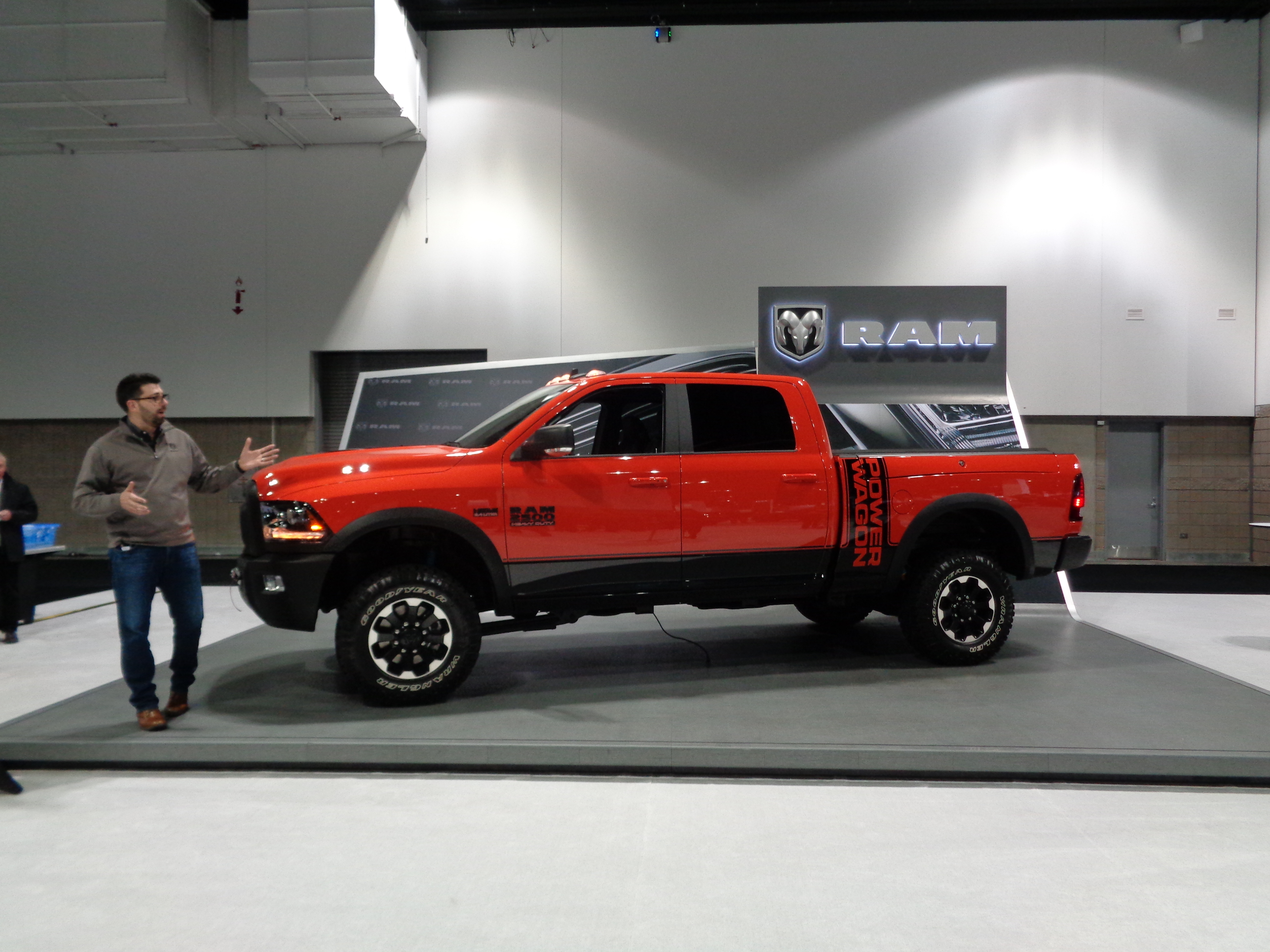
The 2017 Ram Power Wagon will go on sale this spring. (Mary Conway)
The 2016 Honda Civic offers turbocharged engine. (Tim Coy)
The 2016 Volvo XC90 has been restyled. (Tim Coy)
The 2016 Toyota Tacoma in quicksand exterior finish. (Tim Coy)
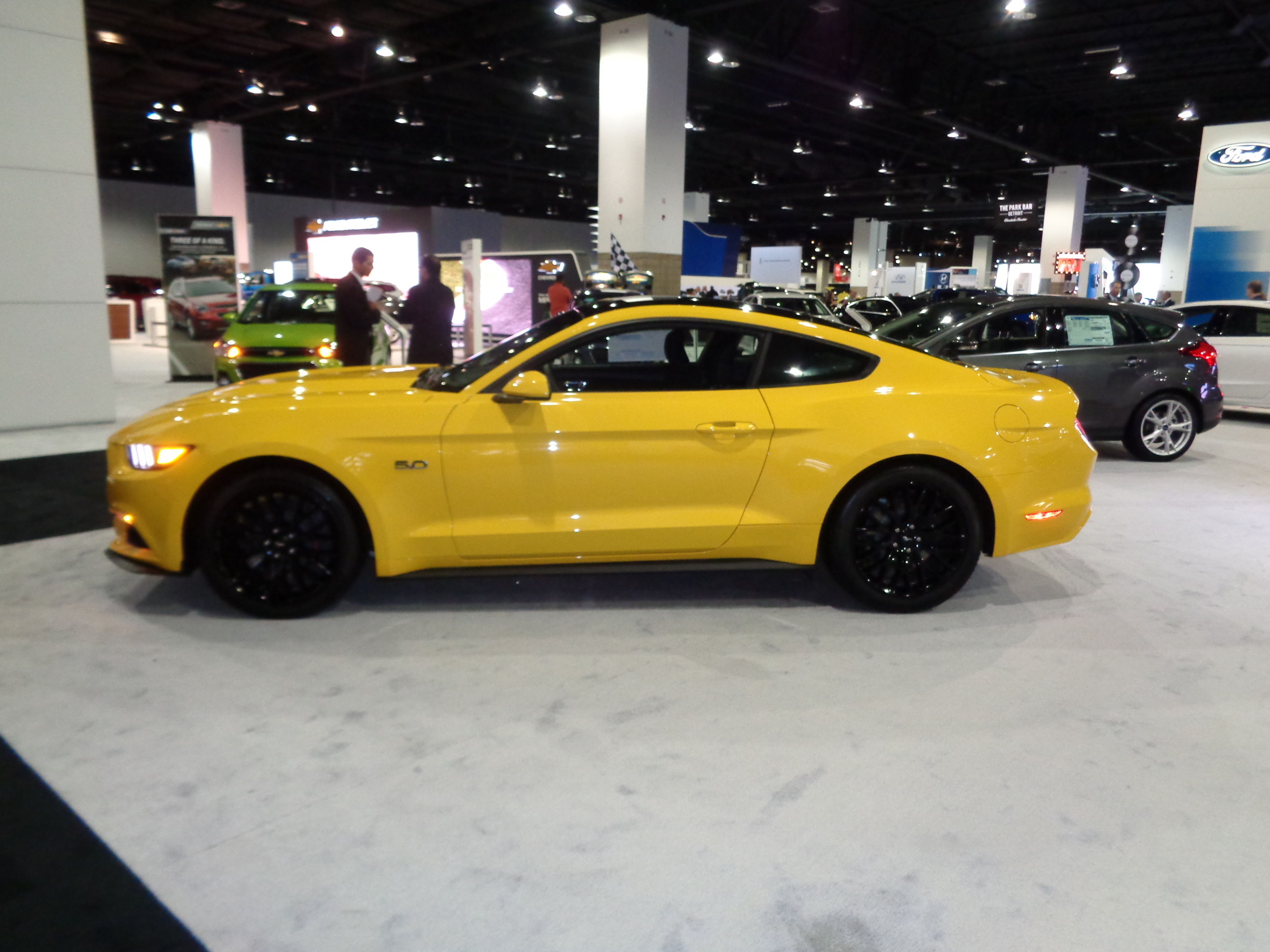
Bright yellow suits the 2016 Ford Mustang GT. (Tim Coy)
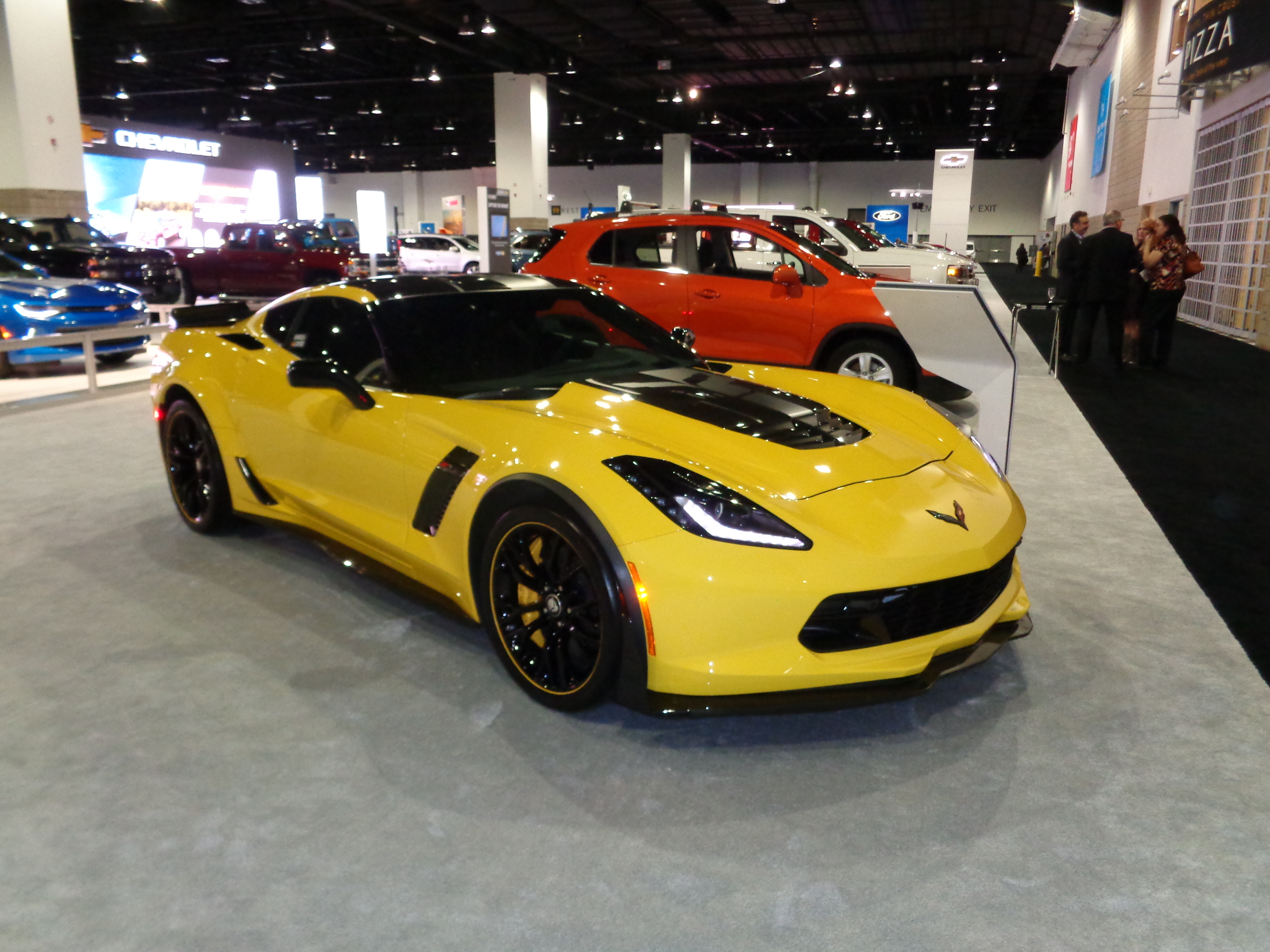
And it’s bright yellow for the ’16 Chevrolet Corvette Z06, too. (Tim Coy)
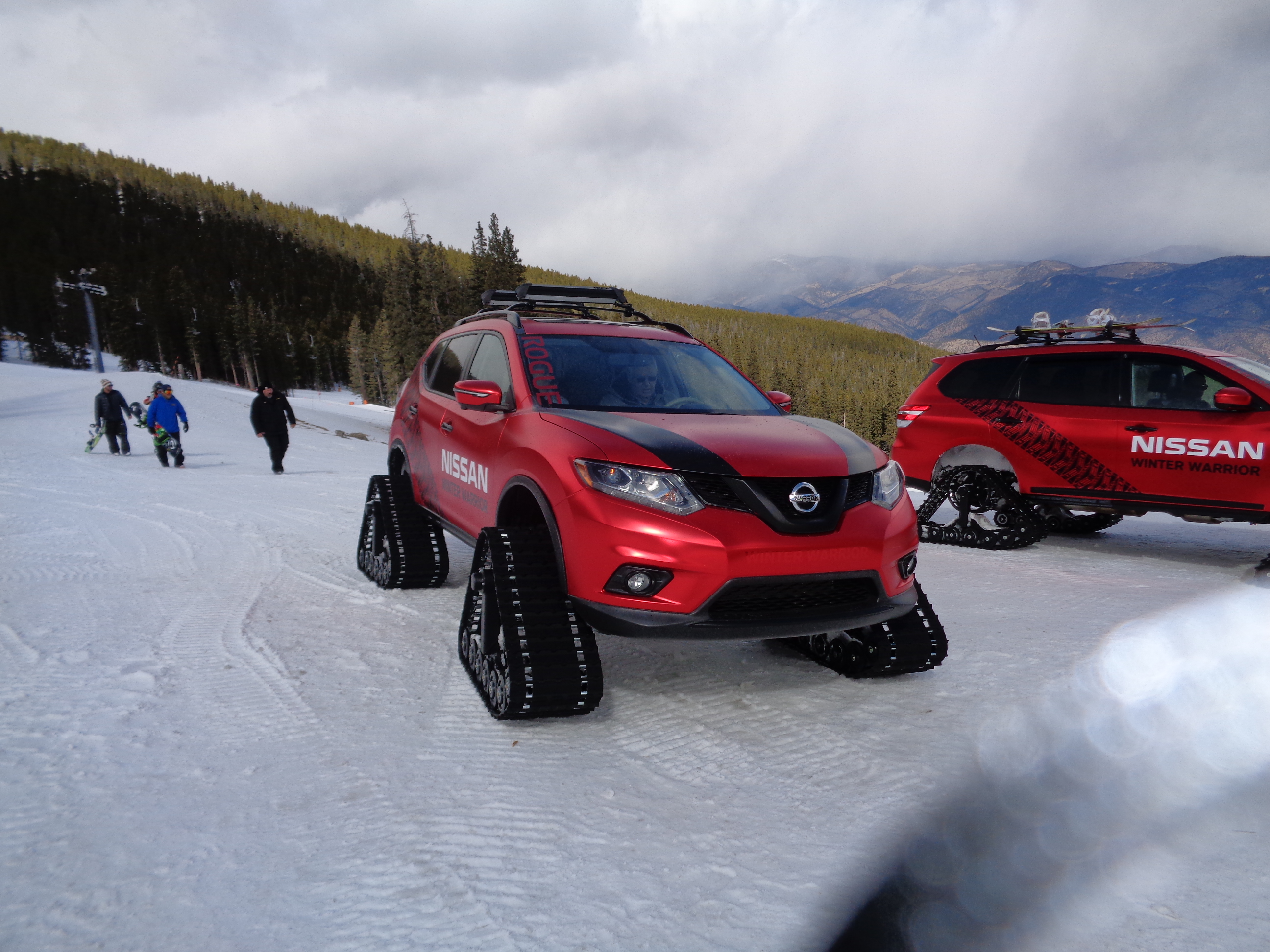
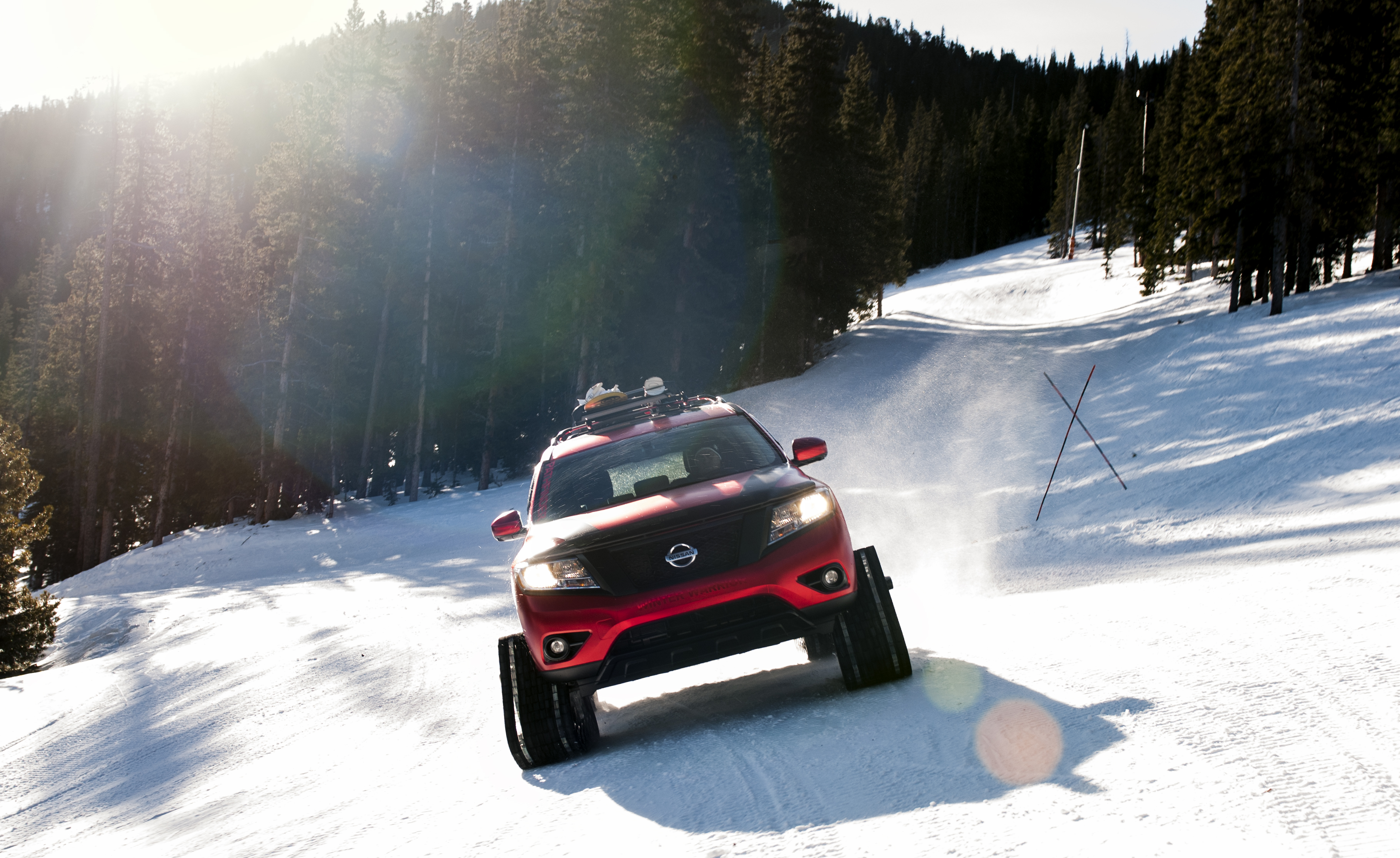
The Rogue version of Winter Warriors prepares for a ski slope run. (Steve Parrett)
Among the more unusual attractions at the 2016 Denver Auto Show were the Nissan Winter Warrior track vehicles.
Nissan created Winter Warriors by replacing wheels and tires of the Rogue, Murano and Pathfinder crossovers with heavy-duty snow tracks. The 15-inch-wide tracks are 4 feet long and 2 ½ feet high. The Dominator tracks are produced by American Track Truck Inc.
I drove high up to Echo Mountain above Idaho Springs a day prior to the start of the auto show, in order to test-drive the rugged-looking Winter Warriors. Unless they’re on a downhill run, the warrior vehicles are of slow and deliberate movement.
The larger Nissan Murano Warrior is in action on the slopes. (Steven Diehlman)
Because of the oversized tracks under the wheel wells, only slight turns are possible, and an extremely wide turn circle is required. The tracks, though, make them a go-anywhere vehicle in the snow.
Cost of the Dominator treads are approximately $9,000 for a set of four.
The suspensions and wheel wells are modified to fit the snow tracks, but otherwise all drivetrain components, including the engines and Xtronic transmissions, are factory fresh.
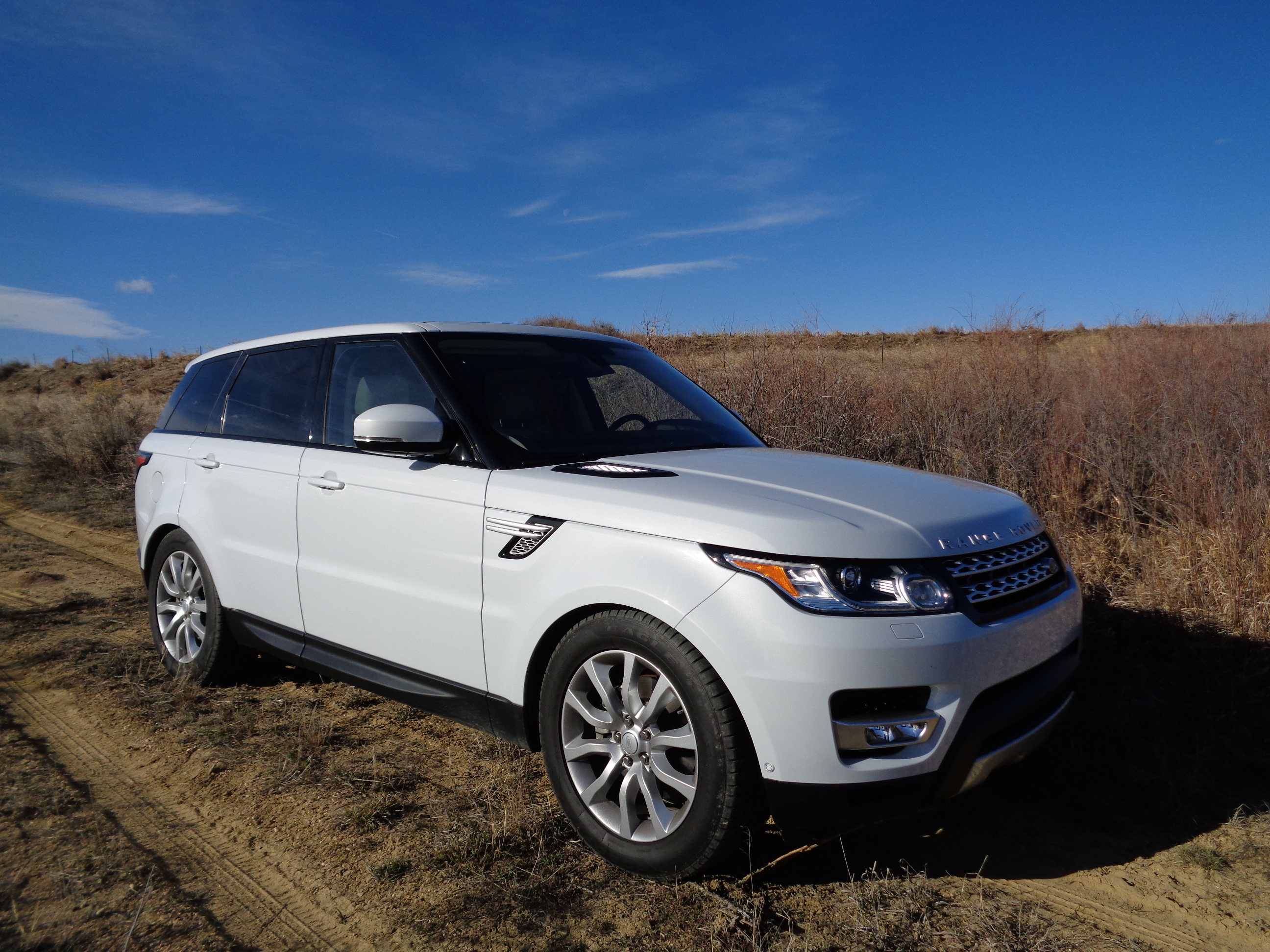
The 2016 Range Rover Sport HSE Td6 averaged 26 miles per gallon. (Bud Wells photos)
Range Rover, sharing Denver Auto Show space with British stablemate Jaguar toward the back of the Colorado Convention Center, displayed its first-ever diesel engine for the North American market.
For a week, I’ve enjoyed performance of the 3.0-liter V-6 turbodiesel in the 2016 Range Rover Sport Td6; the same engine is available in the full-size Range Rover. It produces 254 horsepower and 440 lb.-ft. of torque.
The outstanding SUV offroaders this year are an answer to a long-asked question, “When will the Land Rover company (which builds the Range Rovers) add a diesel to its power sources?”
In promoting their new diesel-powered products, the Range Rover and Range Rover Sport join competitors BMW X5 and X3, Mercedes GL, Porsche Cayenne, Audi Q7 and Q5 and Jeep Grand Cherokee, models which have offered diesel engines for some time.
Electric-powered cars, gas/electric hybrids and plug-in hybrids were plentiful at the show.
Majority of the cars, trucks and SUV crossovers, of course, were those with refined internal-combustion engines.
The Denver Auto Show is the greatest collection of all-new and concept automobiles ever seen in this city. It opened Wednesday evening, March 16, at the Colorado Convention Center and continued through Sunday, March 20.
More than 500 new models representing 36 makes were displayed on the 500,000-square-foot convention floor. The event also featured allied and aftermarket accessory exhibitors.
The show was organized by the Paragon Group and presented by the Colorado Automobile Dealers Association (CADA). Donnie Chrismer of Sterling represented the CADA as auto show chairman. Assisting as honorary chairpersons for the show were John and Paige Elway.
Among stars of the show were the Lincoln Continental concept, which will arrive in the showrooms later this spring; the 2017 Chrysler Pacifica, which will replace the longtime minivan standardbearer Chrysler Town & Country; and Cadillac’s new crossover, the XT5.
Hyundai showed off its 2017 version of the little Elantra in contrast to the unveiling of the high-end ’17 Audi R8 Coupe.
Exotic models were on display from Aston Martin, Bentley, Ferrari, Lamborghini, Porsche and Maserati.
Camp Jeep, a popular show attraction the past several years, has undergone a 20 to 25 percent expansion in floor space, according to Tim Jackson, head of the CADA. The four-wheel-drive Jeeps, in the past, have climbed simulated hills and rocky terrains. “This year, they hauled in dirt and boulders and logs to create real-life mountain-climbing scene,” said Jackson.
Much as another V-6 turbodiesel has done for the Ram 1500 pickup the past two years, the Range Rover’s Td6 diesel has pushed the English-built SUV far ahead of its field of gasoline-powered competitors.
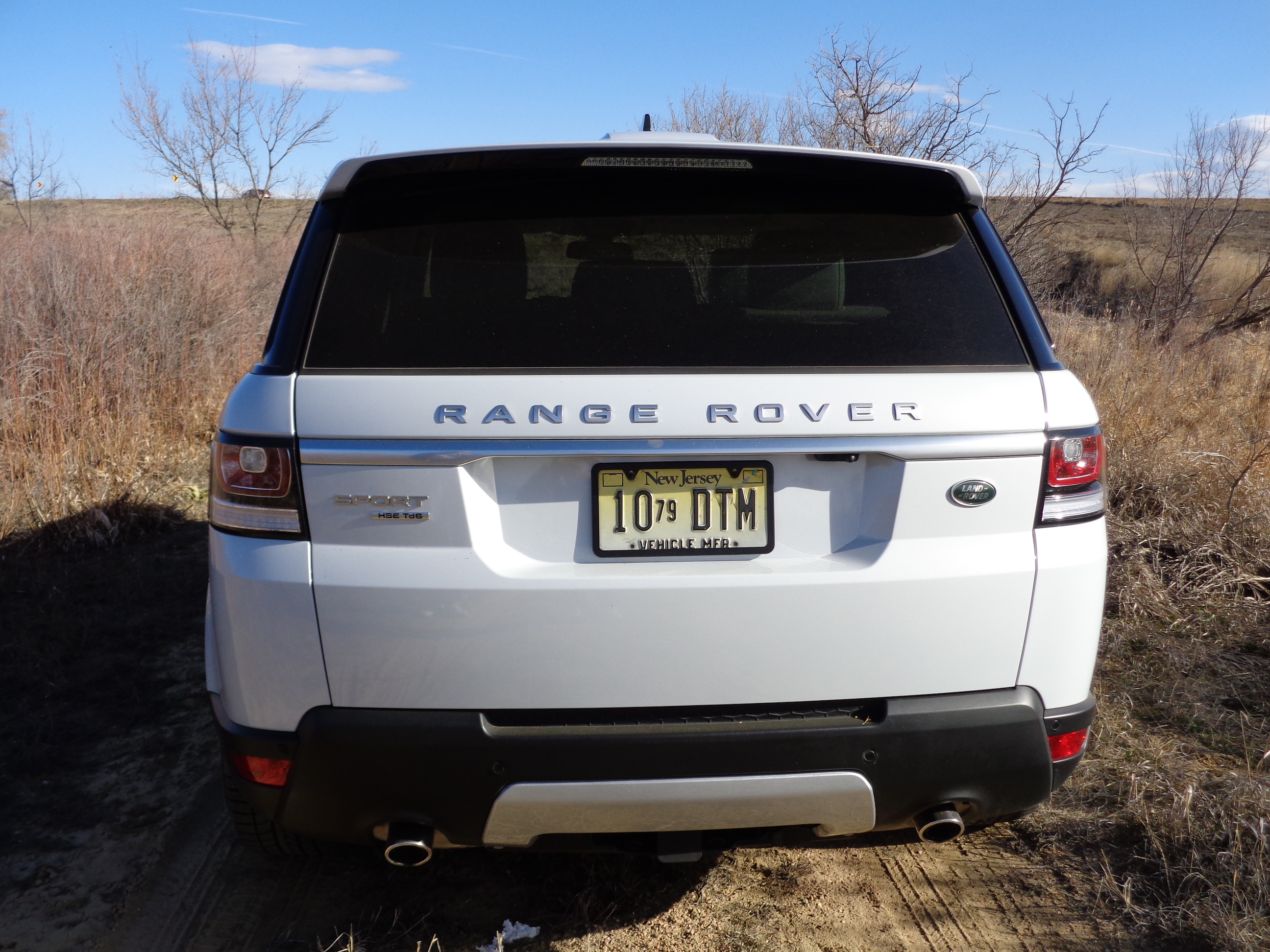
The Range Rover Sport, with dual exhausts, offers a strong look from the rear.
The Range Rover Sport Td6 carries an EPA estimate of 22/29 miles per gallon; my travels produced an overall average of 26 mpg. Cruising range is 650 miles.
The Range Rover’s diesel is an excellent performer, though it occasionally, after stopping at an intersection light, shudders for a second or two before engaging its normally strong power. Otherwise, it performs quietly and smoothly.
The turbodiesel engine adds $1,500 to the cost of the Range Rover Sport; a dozen or more other SUV-enhancing amenities push its sticker out of the $70,000s into the $80s.
Not the least ($1,850) is the 825-watt, 19-speaker Meridian surround-sound audio delivering a “live concert” inside the cabin’s luxurious setting. There are climate seats in front, heated seats in the back row, a heated steering wheel, adaptive headlights which automatically dim to oncoming traffic, and blind-spot monitor.
With lane-departure warning, all-terrain control, sliding panoramic roof, adaptive cruise, 20-inch style wheels, a front cooler console compartment and shadow zebrano wood trim, it all adds up to an $84,260 SUV package from the Land Rover builders.
The Range Rover Sport’s air suspension system features an automatic height access which lowers the vehicle when the transmission is place in Park for improved entry and exit. The vehicle returns to optimal ride height at a speed of 9 miles per hour.
Cargo space in the Range Rover Sport is almost 28 cubic feet. It rides on Goodyear Eagle 255/55R20 tires.
Gasoline engines available are 3.0-liter V-6 supercharged and 5.0-liter V-8 supercharged.
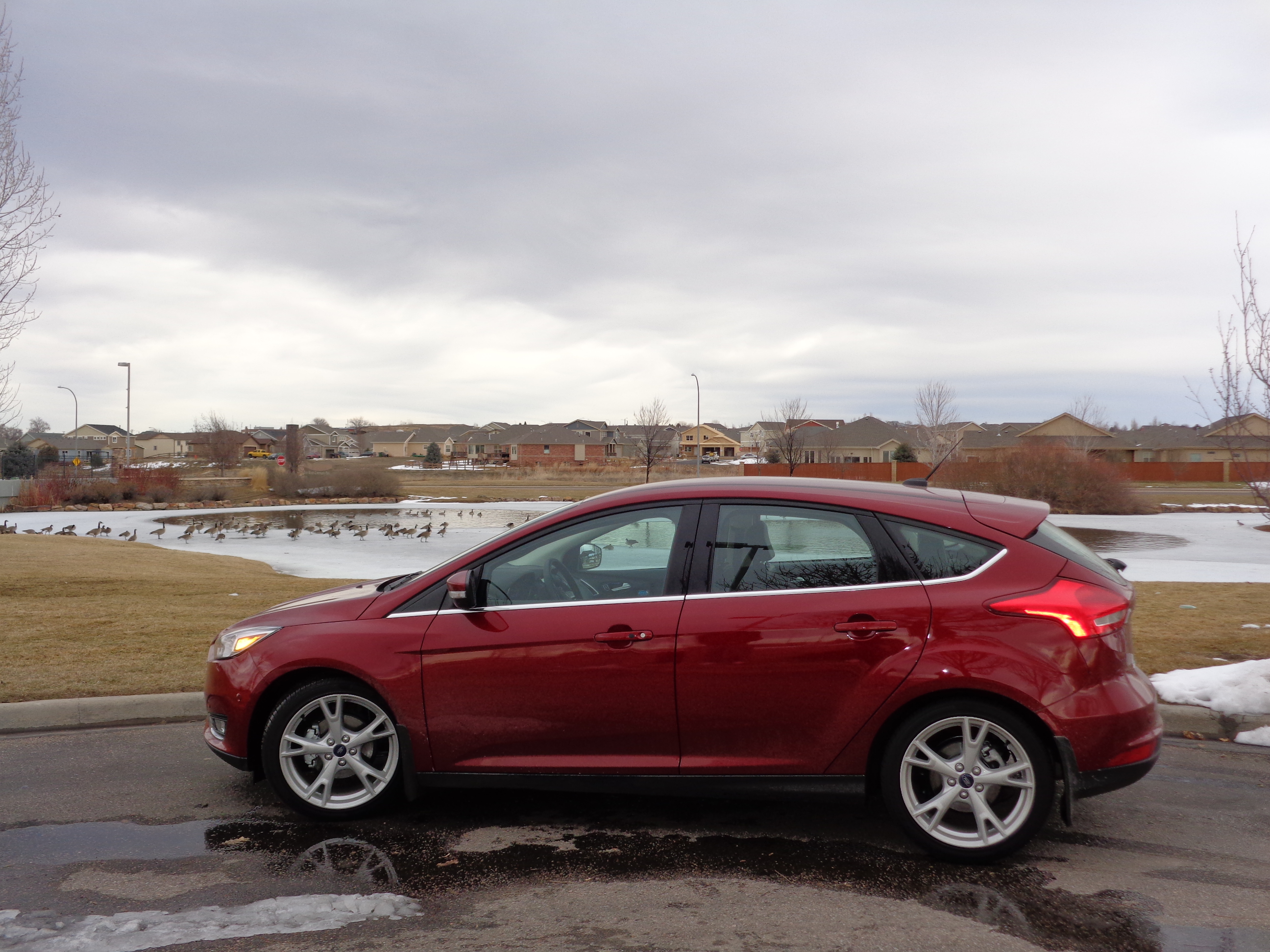
The 2016 Ford Focus hatchback is 7 inches shorter than sedan. (Bud Wells photo)
I’ve liked the five-door hatchback as an optional style for the Ford Focus since it showed up four years ago. Other than a bit of tightness in rear-seat legroom and headroom, it has been a boon for the car’s handling, parking, economy and cargo-carrying capability.
The hatchback, measuring 171.7 inches, is a full 7 inches shorter in overall length than the Focus 4-door sedan. In some relatively short parking garages, the hatchback fits with precious room to spare over the four-door.
There is no difference in the curb weight; both scale around 3,000 pounds.
Both versions of the Focus are competitive in the crowded compact sales field, which also includes the Toyota Corolla, Honda Civic, Chevrolet Cruze, Mazda3, Kia Forte, Volkswagen Golf, Hyundai Elantra and others.
A review model sent my way recently was the upscale Titanium model of the ’16 Focus hatchback, finished in ruby red. Featured, in addition to its excellent handling qualities, is a new Sync3 infotainment system, which seems easier to use and of quicker response than the old MyFord Touch setup.
An added Focus amenity, which Ford showed off on an Escape several years ago, is its ability to parallel park itself. Pull ahead of a parking space along the curb, press the Active Park Assist button, shift into reverse, take your hands off the wheel and the system steers the vehicle, with the steering wheel spinning this way and that, into the parking space. It tells the driver to brake, then to slowly pull forward and place the gearshift in park. The job is done.
Though an impressive feature, I’d not use it often, since the driver still is responsible for gear selection, accelerating and braking, I’d go ahead and steer it, too.
Charcoal black leather seats were comfortable and supportive and the Sync3 system included voice-activated navigation, Sony audio with 10 speakers, Sirius XM and Bluetooth.
The Focus exhibited good, strong braking. It performs with a 160-horsepower, 2.0-liter GDI (direct-injection) 4-cylinder engine mated to a 6-speed select-shift automatic transmission. Its overall fuel mileage average of 32.1 miles per gallon fell right in the middle of its EPA estimate of 26/38.
Though many Focus models are sold in the low $20,000s, the Titanium version carried a sticker price of $28,045. Several other added options, other than those already mentioned, are blind-spot and lane-keeping alerts, reverse-sensing and rearview camera, remote start, automatic-dimming headlights, heated front seats and heated steering wheel and dual-zone electronic air conditioning.
The Ford Focus showed up in model year 2000, a replacement for the aged Contour, and its best sales numbers were its first two years, 286,166 in 2000 and 264,414 in’01. It has consistently sold more than 200,000 per year.
Ford’s selling strength, of course, is in its lines of pickups and SUV/crossovers. Among its cars, the Focus ranks second-best, behind the midsize Fusion. The Focus is far ahead of the Mustang, Fiesta, Taurus and C-Max.
Here are the specifications for the ’16 Ford Focus Hatchback Titanium:
Capacity 5 passenger
Wheelbase 104.3 inches
Length 171.7 inches
Width 71.8 inches
Height 57.8 inches
Curb Weight 3,015 pounds
Track 61.2 inches front, 60.4 rear
Ground Clearance 5.3 inches
Turn Circle 36 feet
Drivetrain Front-wheel-drive
Engine 2.0-liter 4-cylinder
Horsepower/Torque 160/146
Transmission 6-speed automatic
Steering electric power-assist rack-and-pinion
Fuel mileage estimate 26/38
Fuel mileage average 32.1
Fuel Tank 12.4 gallons, regular unleaded
Wheels 17-inch
Tires Cooper 215/50R17
Cargo Volume 23.3 cubic feet
Warranty 3 years/36,000 miles basic, 5/60,000 powertrain
Competitors Honda Civic, Toyota Corolla, Chevrolet Cruze, Mazda3, Kia Forte, Volkswagen Golf, Hyundai Elantra
Assembly Plant Wayne, Mich.
Parts Content N.A.
Base Price of Lowest Model $18,100; Base Price of Review Model $23,725; Destination Charge $875; Sticker Price $28,045.
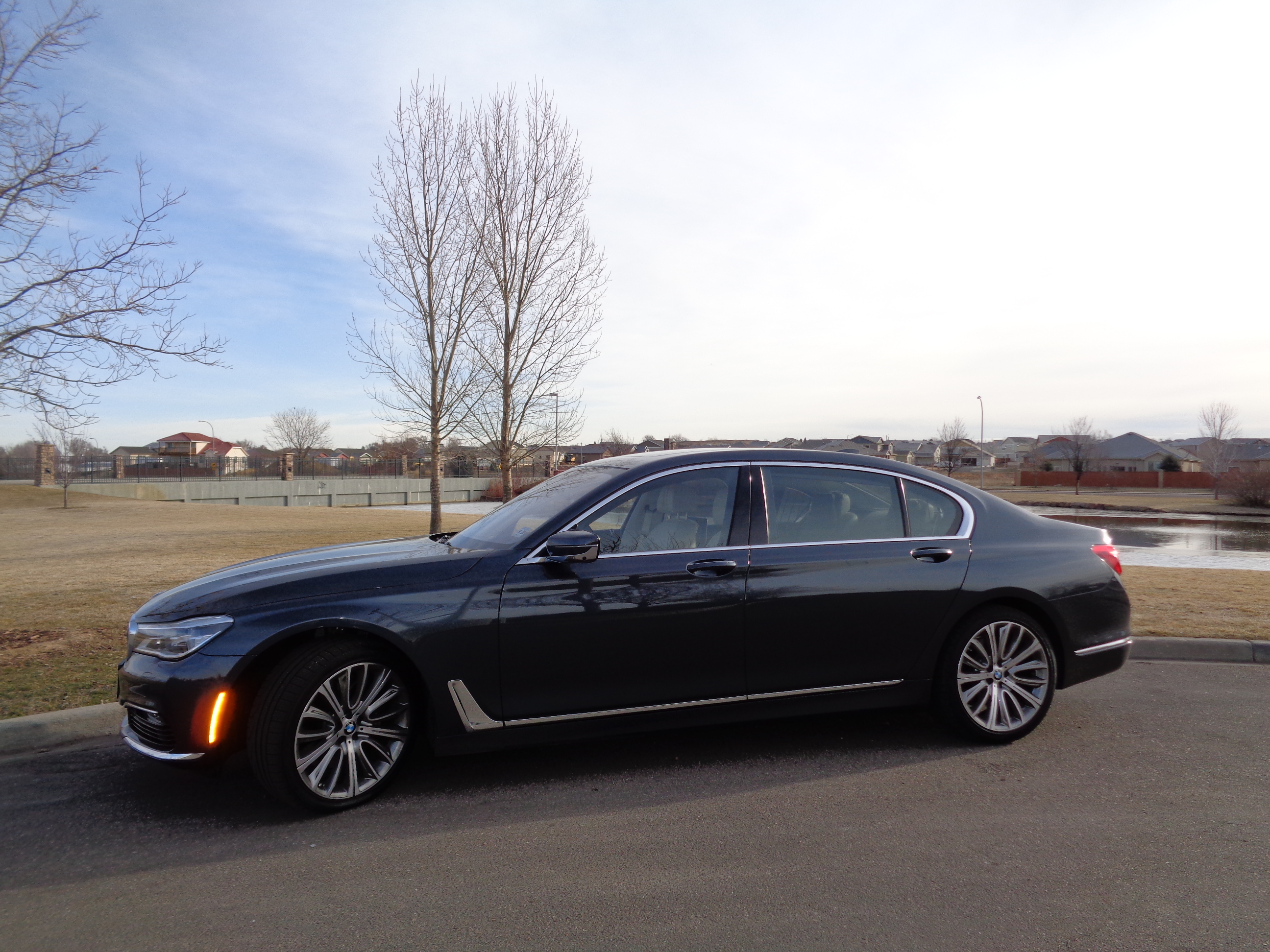
A long wheelbase is standard for 2016 on the BMW 750i xDrive sedan. (Bud Wells photos)
BMW’s lavish flagship, the 2016 750i xDrive sedan, came my way recently – the most expensive auto I’ve driven in the past 30 months. In redesigned form, it is the 7 series’ sixth generation.
As the law of averages sometimes dictates, the big, expensive Bimmer’s delivery was followed by a pair of inexpensive Scions, both priced below $20,000.
A similar incidence of such an extreme difference in price and size of review models occurred at Christmastime, when the impressive ’16 Honda Civic was overalapped by the Mercedes-Benz S550 four-door sedan.
Comparing a Mercedes against the BMW is always interesting; they’re fierce, age-old German rivals.
The full-size Mercedes sedan showed up with sticker price of $128,935, and, wouldn’t you expect it, the BMW topped it by $310 at $129,245.
Jan and I last Saturday evening drove the BMW to a northern area of Denver for dinner. With a 4.4-liter, twin-power turbocharged V-8 engine and 8-speed automatic transmission, the 750i, with all-wheel drive, performed every bit as smooth and responsive as did the Mercedes S550 sedan in December.
What a driver’s delight – the 445-horsepower V-8 (480 lb.-ft. of torque) will perform in five driving modes opted by the driver, from Comfort to Eco to Sport to Sport Plus, and an Adaptive mode, which in adapting settings to suit the driving style and situation, the suspension firmness, steering response and shift patterns are adjusted for the big sedan.
At a popular restaurant, we grabbed the last parking spot in a large lot and on my side it was tight against a thick hedge. After squeezing out the driver’s door, I brushed past the hedge’s edges to get to the door of our destination.
Had our review model been equipped with BMW’s newest major feature, self-parking, I could have avoided that. In a tight-park situation, the driver may step out of the BMW, and with a special key fob direct the car to pull into the narrow space and park itself. Then, on returning to the parked BMW, the key will direct the car to back out of the space, the driver steps back into the cabin and heads home.
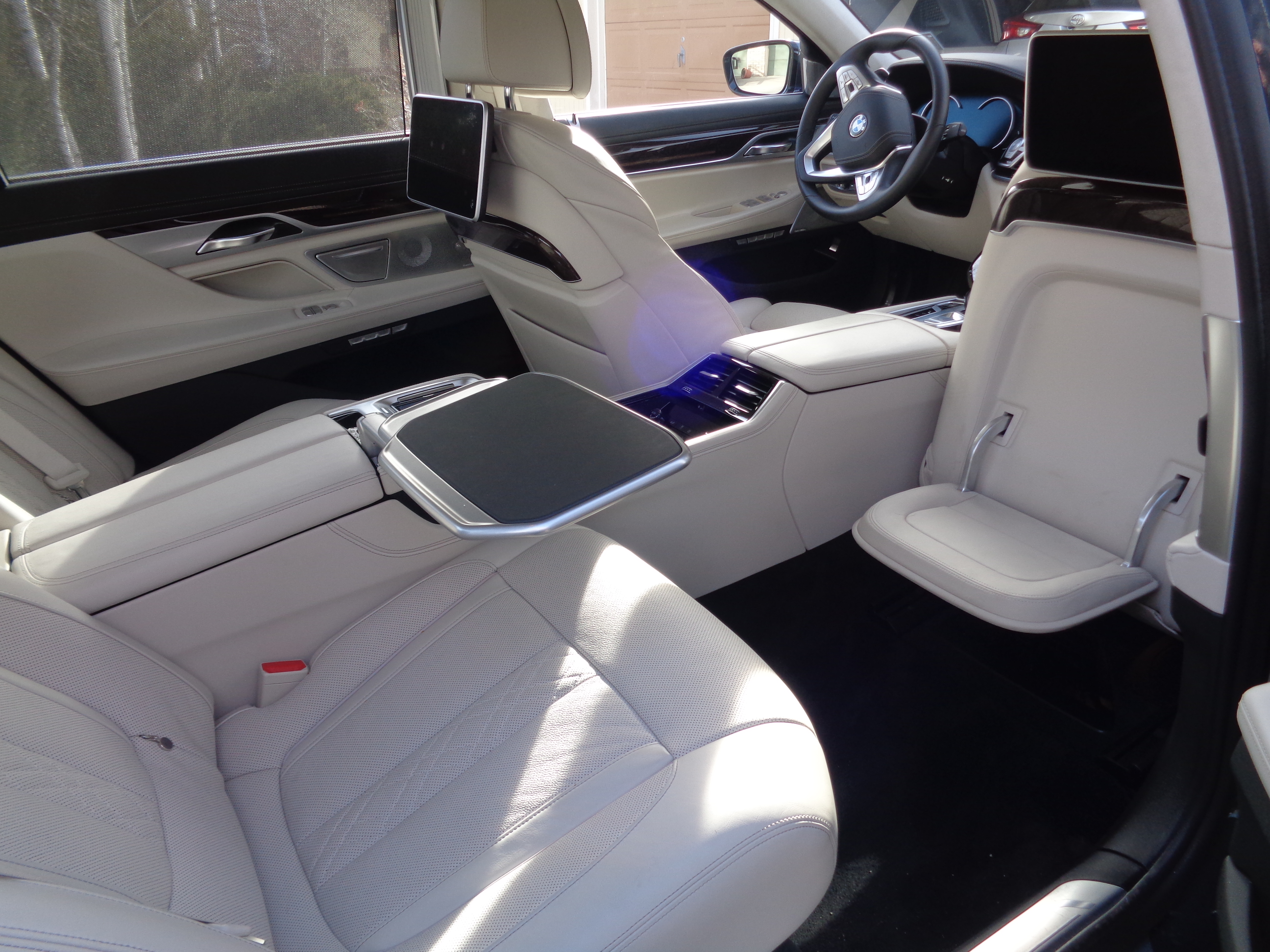
Highlighting the interior are diamond-quilted white nappa leather seats and soft pillows on the rear headrests.
A footrest and accessory tray are available to the right-rear passenger seat in the 750i.
A solid tray, tied to a metal arm, will lift from the rear center console and swing over in front of the right rear passenger, whose seat can be reclined. The passenger, if only he and the driver are traveling, may push a switch to move the front passenger seat forward and direct a footrest to rise from the seatback. The rear-seat passenger is able to stretch out in comfort for the ride.
Much of my driving was in Sport mode, and the V-8 delivered an average of 20.1 miles per gallon. Many buyers of the BMW 7 series opt for a 320-hp, turbocharged, 3.0-liter 6-cylinder engine.
A few of the dozens of high-end options boosting the BMW’s price to $129,000 are night vision with pedestrian detection, front and rear heated and cooled ventilated seats, power side and rear window shades, Bowers & Wilkins sound system. To increase volume of the audio system, circle a finger to the right; circle left for lower volume.
With press of the key fob when approaching the sedan at night, light is splayed on the ground beneath the doors’ area, illuminating the path. And, not to be outdone by Mercedes, in a small sealed bag in the center console storage compartment is a cigarette lighter.
Almost 200 pounds of curb weight was cut from the 750i through the use of carbon-fiber-reinforced plastic and high-tensile steel.
Here are the specifications for the ’16 BMW 750i xDrive sedan:
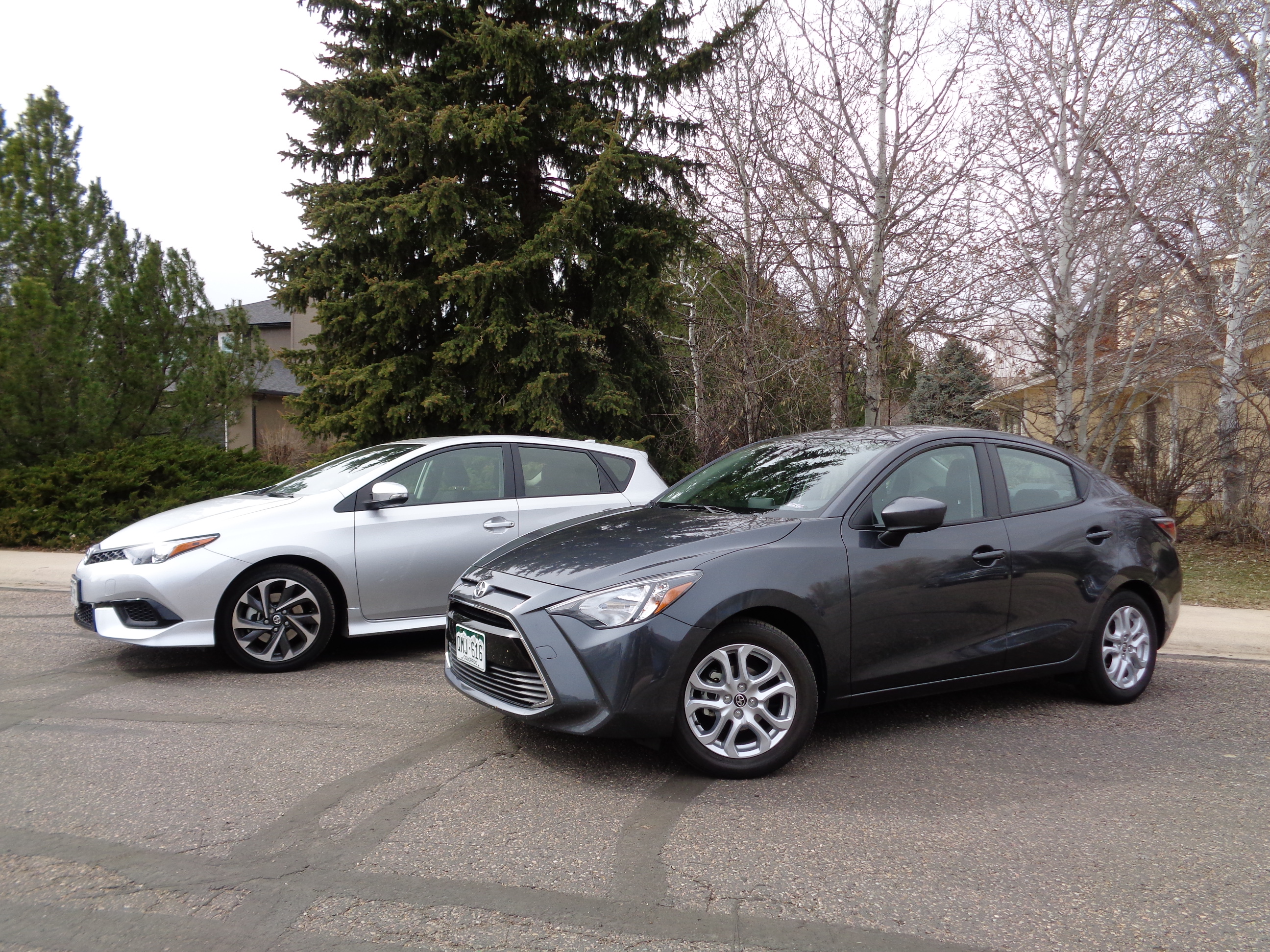
The 2016 Scion iM hatchback, left, and the iA four-door. (Bud Wells photo)
Two weeks following Toyota’s announcement it was killing off the Scion brand, a couple 2016 models, the iA sedan and iM hatchback, showed up at my home. They are new products from Scion, and I presume they’ll be continued into the 2017 model year as Toyota models.
The two Scions, priced at $16,470 and $19,594 respectively, are the cheapest cars I’ve driven in a couple of years, and, fittingly, came my way immediately following the lavish BMW flagship 750i xDrive sedan. I enjoyed getting back to more basic transportation.
Regarding the two Scions, the iA four-door is based on the Mazda2 and the iM in looks is a low-price copy of the Lexus CT200h hatch.
Scion was introduced in California in 2003 as a separate brand from Toyota, aimed at young drivers. It was sold nationally beginning in 2004.
The youth brand never reached the sales level anticipated by its Toyota bosses. Led by its sporty tC coupe, Scion peaked in 2006 with 173,034 sales. It then suffered five years of declining sales before a spurt in 2012, when its lineup included the tC, FR-S, xB, xD and iQ. Last year, it sold only 56,000 units.
The new iA, which rides on a wheelbase of only 101 inches, has a short turn circle of 32 feet. A glance at its downward-aimed grille from the front reminds me just a bit of an unpopular trash fish we would once in a while catch years ago fishing the trout stream at my boyhood home of Wray. Once past the grille, though, the sleek body is very stylish.
The iA produces super economy from its little 106-horsepower, 1.5-liter 4-cylinder engine and 6-speed manual transmission. It carries an EPA estimate of 31/41 miles per gallon, and my overall average was 37.5, aided by a 50-mile highway cruise. An optional 6-speed automatic transmission will push the sticker price $1,100 higher.
The iA’s low sticker price of $16,470 includes 7-inch touchscreen display for audio with Bluetooth and Pandora, push-button start, cruise control, backup camera and intermittent wipers.
The iM, on a wheelbase of 102.4 inches, is equipped with a bigger engine – a 137-hp, 1.8-liter 4-cylinder and the 6-speed manual tranny. With its more powerful engine, the iM’s EPA status is 27/36, and I averaged only 26.5 with it in mostly town driving.
A dark, harsh interior in the iM I drove is rescued by a white padded faux-leather strip that slashes across the dash. Cargo space behind the rear seat in the iM is almost 21 cubic feet; that’s 4 more cubic feet than in the Honda Fit.
Both iA and iM are front-wheel-drive models
When Scion is shut down in August, the iA, iM and FR-S models are expected to be continued as Toyotas, while the tC coupe is expected to be discontinued after its long run.
Here are the specifications for the ’16 Scion iA four-door sedan:
We weren’t sure Nissan would ever upgrade its dated Titan half-ton pickup. Finally, though, a new one arrives, and it quickly tows away those doubts of recent years.
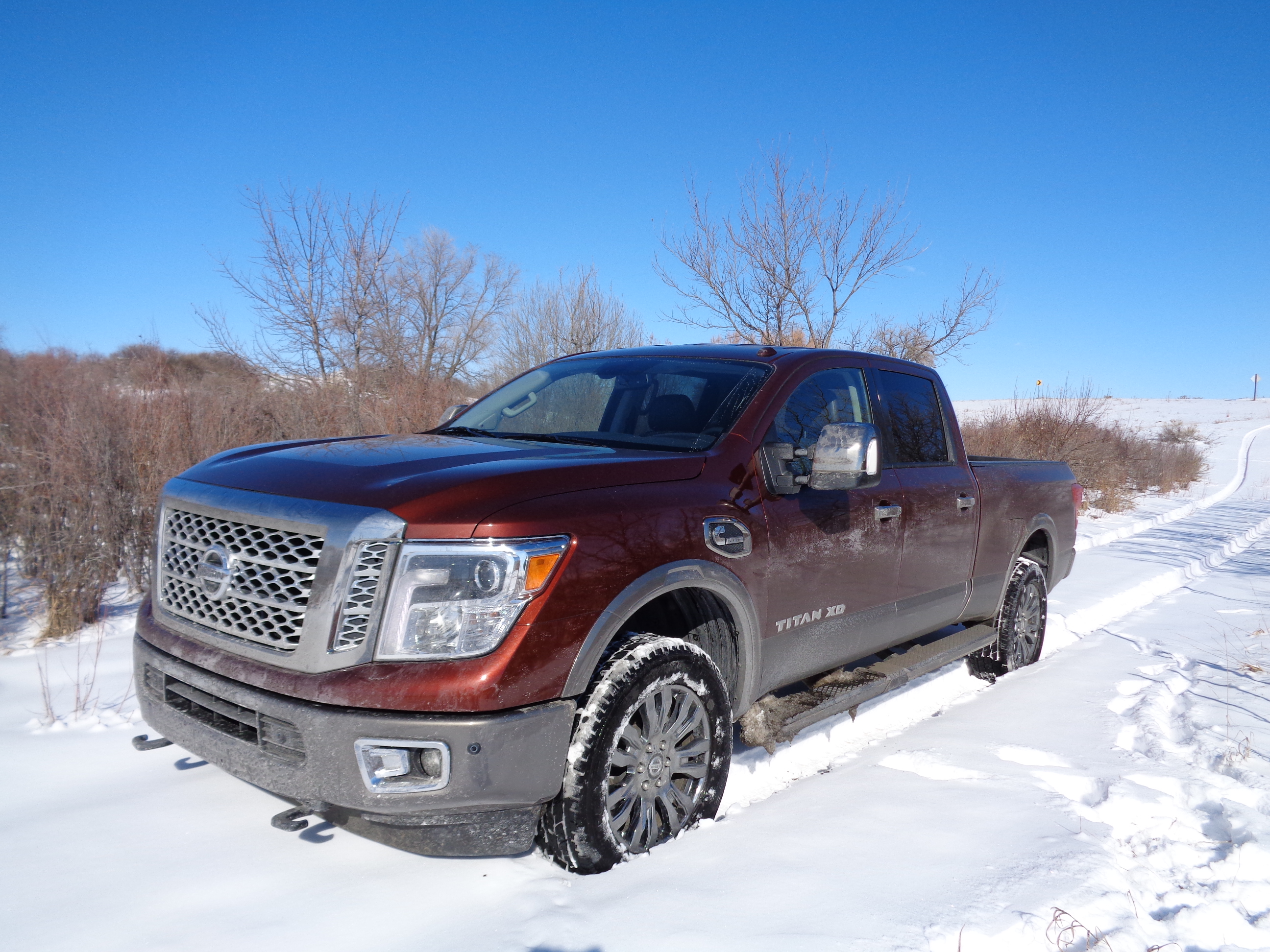
The 2016 Titan is bigger – a bit larger than a half-ton, not yet as big, though, as a three-quarter-ton. A prime market, Nissan says, will be those seeking stronger tow capacity without stepping up into the heavy-duty 2500 field.
The big news for the Titan, besides its larger size, comes from beneath the hood – the new 310-horsepower, 5.0-liter Cummins V-8 turbodiesel engine, mated to a 6-speed Aisin automatic transmission and developing 555 lb.-ft. of torque. The Titan XD Platinum Reserve four-wheel-drive version boasts towing capacity of 10,610 pounds; tow capacity for the truck in rear-wheel-drive configuration (when properly equipped) jumps to 12,310 pounds.
The big Titan’s arrival in my driveway coincided with a 10-inch drop of blowing snow on our area, on top of 6 to 8 inches received over the preceding two weeks; the Nissan plowed head-on into the challenge. The footing situation required use of four-wheel drive almost continually, and a couple of times I engaged 4-Lo range. The Nissan system lets the driver shift between two-wheel and four-wheel drive instantaneously up to 60 miles per hour.
Below-average cold and all that white stuff to churn through, with some icy spots beneath, kept the big truck’s fuel mileage in town at an overall low average of 10.6 miles per gallon.
On Sunday morning, Jan and I headed west on U.S. 34 to the I-25 interchange, made a quick stop at Starbucks, then north on I-25 to Crossroads Boulevard, east to Windsor and back to Greeley for services at our downtown church.
The highways were clear and the opportunity to drive in rear-wheel-only mode resulted in fuel mileage of almost 18 mpg. For the entire week, the Titan averaged 13.3 mpg.
In seeking its own niche between the half-ton and three-quarter-ton trucks, the 2016 Titan XD’s wheelbase grew to 151.6 inches and its overall length has been stretched to over 20 feet (242.9 inches).
With the longer wheelbase and curb weight in the 7,000-pound range, the Titan XD appears bigger than most half-ton pickups. Its hood height of 55 inches is 3 inches taller than the hood on my personal four-door, 4-by-4, half-ton pickup.
The Platinum Reserve model is the most plush of five offerings for the Titan XD. Other grade levels are the S, SV, SL and the sporty PRO-4X with lots of offroad features, including Bilstein shocks. Standard engine for the XD is a 5.6-liter, V-8 gasoline engine making 390 horsepower and 401 lb.-ft. of torque. It is mated to a 7-speed automatic transmission with adaptive shift control and downshift rev-matching.
The turbodiesel, though, is the lure Nissan is counting on to bring some decent sales back to its Titan. The Titan was introduced in the fall of 2003 and in its first full year sold 83,848 pickups. Sales totaled 87,000 in 2005, but began slipping in ’06 and by 2009 had declined to only 19,000. Nissan sold only 12,140 Titans last year.
Premium leather seats are heated and cooled in the front row and heated in the roomy back seat. The interior features fine stitching at the seats, across the dash and even on the leather-wrapped shift knob. The shifter is on the column, which frees up room for storage in the center console.
On the outside, easier access is provided to the pickup bed by the fact that step rails extend from beneath the front door to the back wheels. The Titan rides on General Grabber LT265/60R20 tires.
The diesel engine option and the many high-end amenities, including a 12-speaker premium audio and a bed liner with built-in storage, raised sticker price to $63,270.
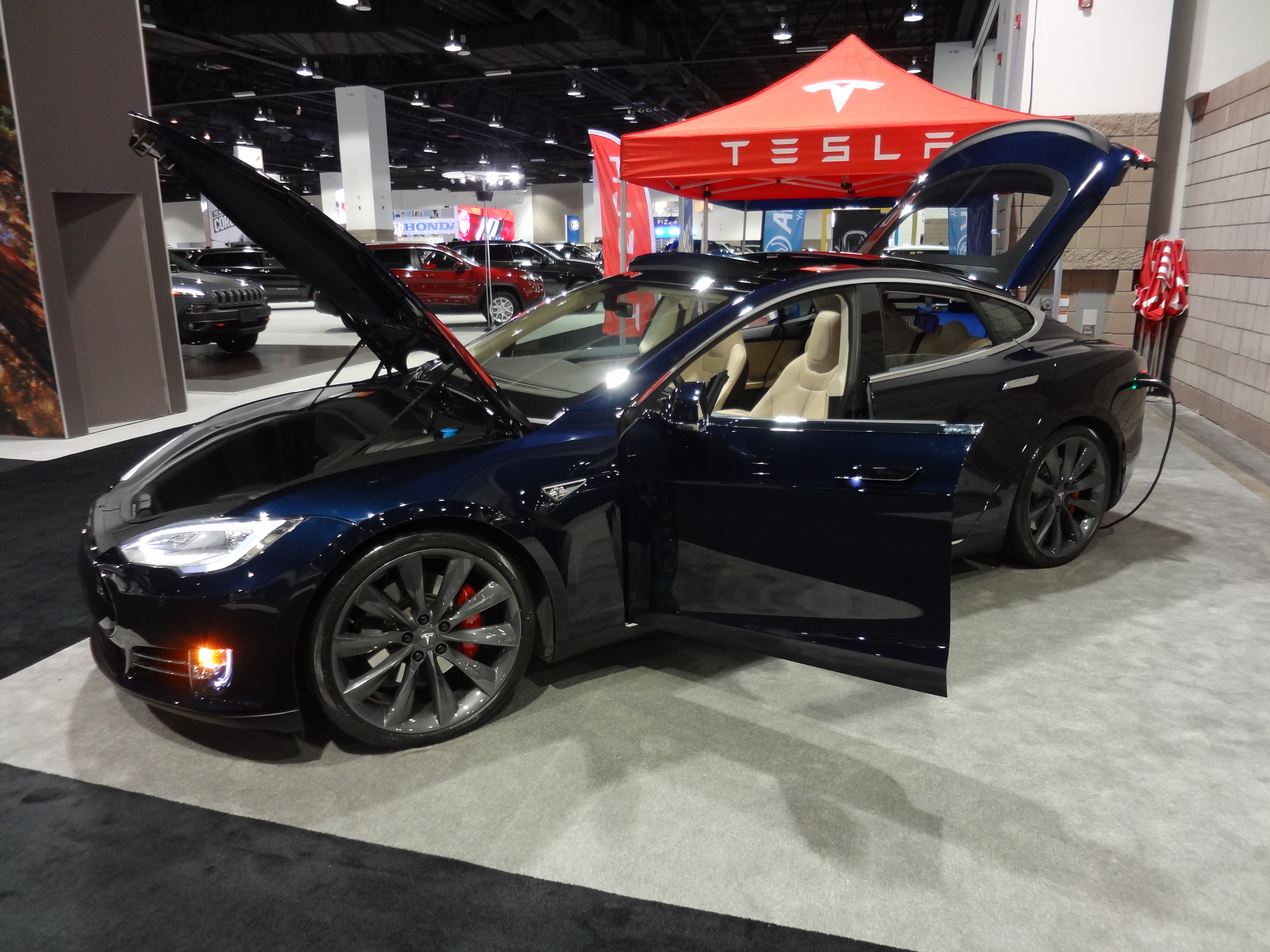
Tesla Model S led sales of all-electric cars. (Bud Wells photos)
Overall sales of alternative-fueled vehicles in the U.S. in 2015 slipped by 13 percent, to 654,442 from 751,613 in 2014.
The bright spot in the alternative-fueled field was the total sales of battery-electric models, which increased 6.6 percent for the year, from 67,851 in 2014 to 72,303 the past year.
Tesla Model S appeared to lead the all-electrics with estimated sales of 26,400, followed by Nissan Leaf 17,269; BMW i3 11,024; Fiat 500e 4,516; Volkswagen e-Golf 4,232; Chevrolet Spark 2,629; Mercedes B-Class Electric 1,906; Ford Focus EV 1,582; Smart forTwo EV 1,387 and Kia Soul EV 1,015. Only four other models registered sales.
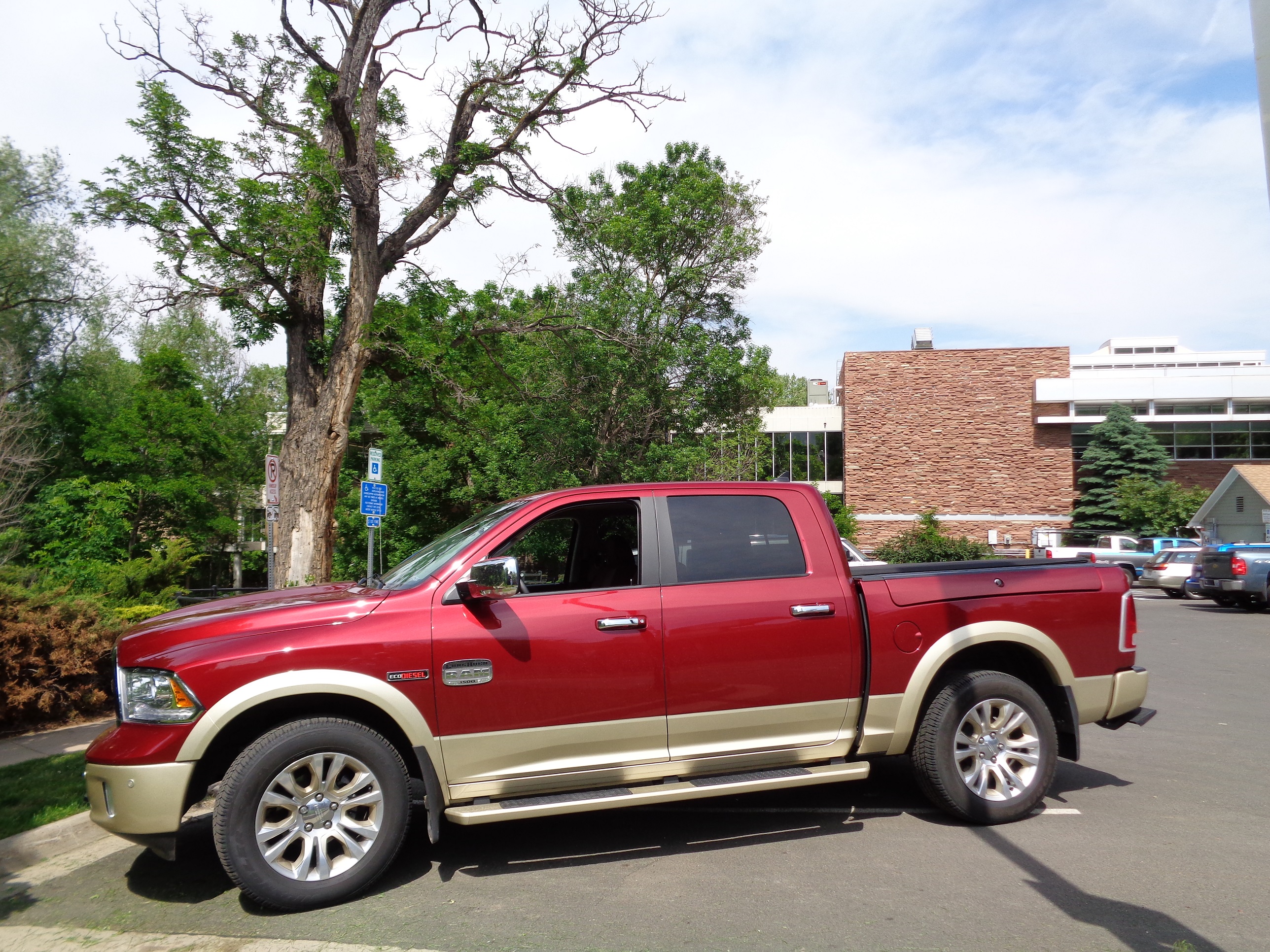
The Ram 1500 offers optional turbodiesel power.
Runaway winners in other alternative markets were the Ram 1500 EcoDiesel pickup in light-duty diesels and the Toyota Prius Liftback in gasoline/electric hybrids.
The Ram offers an optional 3.0-liter V-6 turbodiesel built by VM Motori of Cento, Italy, developing 240 horsepower and 420 lb.-ft. of torque.
Ram’s onetime closest competitors, the Volkswagen Jetta and Passat TDI-diesel-equipped sedans, were shut down in sales in early fall over violation of emissions regulations.
The Ram EcoDiesel’s sales of 57,210 last year were followed by VW Passat TDI sales of 16,845; VW Jetta 16,175; Golf Sportwagen 8,886; Golf 7,149; BMW X5 diesel 5,121; Audi Q5 4,393; Jeep Grand Cherokee EcoDiesel 3,790; Porsche Cayenne 3,585 and Audi Q7 3,579. Sixteen other models registered diesel sales during the year, including the Chevy Cruze, Mercedes-Benz and Land Rover vehicles.
The light-duty diesel sales are not to be confused with the sales of Cummins, Powerstroke and Duramax heavy-duty diesels; three-quarter and one-ton trucks of Ford, Chevy (GMC) and Ram stage their own competitive sales race in that bigger category.
Sales of gasoline/electric hybrid vehicles in 2015 slumped to 384,404 from 452,152 the previous year.
Almost 30 percent of the sales were by the Toyota Prius Liftback (113,829), which has dominated alternative-fueled sales since it was introduced 15 years ago. Others in the hybrid top 10 were Toyota Prius C with 38,484; Toyota Camry Hybrid 30,640; Toyota Prius V 28,290; Ford Fusion 24,681; Hyundai Sonata 19,908; Lexus CT200h 14,657; Ford C-Max Hybrid 14,177; Toyota Avalon 11,956 and Kia Optima 11,492. More than 30 other hybrid models are on the market.
Plug-in hybrid sales also slumped sharply in 2015, dropping to 42,959 from 55,357 in 2014.
The top 10 in plug-in hybrid totals are Chevrolet Volt with 15,393; Ford Fusion Energi 9,750; Ford C-Max Energi 7,591; Toyota Prius plug-in 4,191; BMW i8 2,265; Porsche Cayenne S E-Hybrid 1,163;; Cadillac ELR 1,024; BMW X5 892; Porsche Panera S E-Hybrid 407 and Mercedes S550 plug-in 118.